Food Waste: 7 Ways to Reduce It
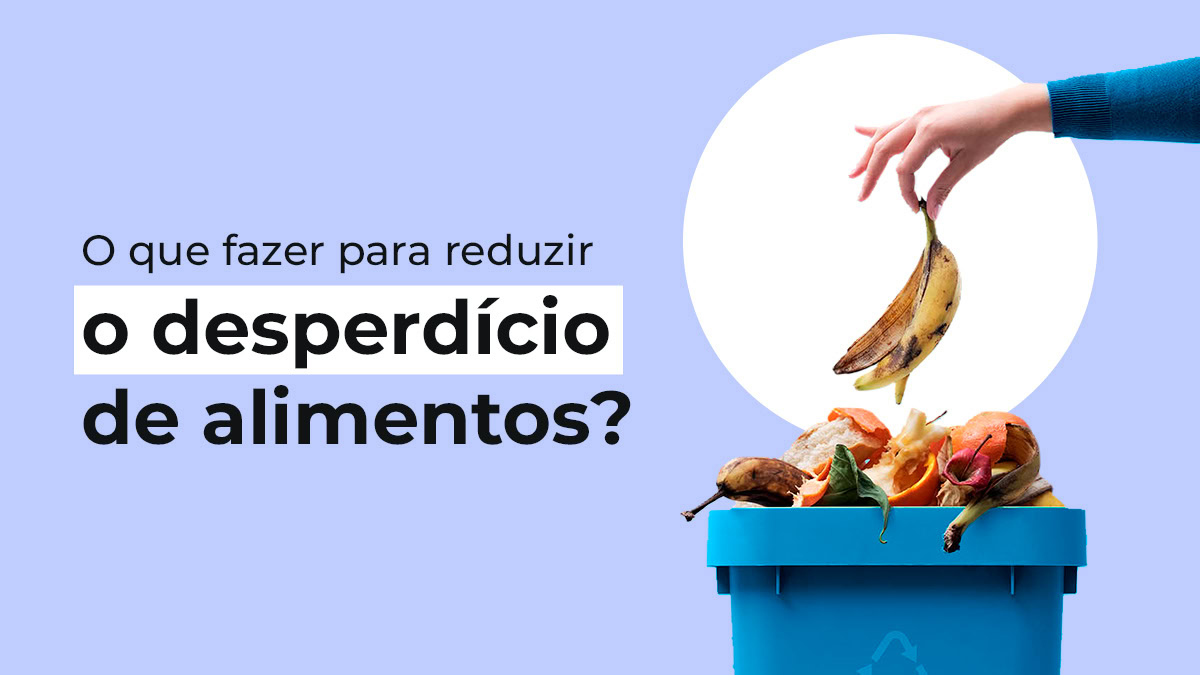
Food waste causes social, economic and environmental impacts across the planet and, for that reason, fighting it is everyone's responsibility: producers, industry, retail, restaurants and consumers.
In this article, learn how restaurants can help reduce food waste and, at the same time, improve business performance. Read on!
The impact of restaurants on food waste
In 2022, while 783 million people went hungry and a third of the population faced food insecurity, the world generated 1.05 billion tonnes of food waste, counting both edible and inedible parts. That figure is equivalent to 132 kilos per capita per year, broken down as follows:
- 60% at the household level: 79 kg/capita/year and 631 million tonnes
- 28% in food service: 36 kg/capita/year and 290 million tonnes
- 12% in retail: 17 kg/capita/year and 131 million tonnes
The data come from the Food Waste Index Report 2024, prepared by the United Nations Environment Programme (UNEP).
The UN study also estimates that food loss and waste costs the global economy approximately US$ 1 trillion and generates 8% to 10% of greenhouse gas emissions.
So by implementing measures to reduce food waste, restaurants not only help fight hunger, but also cut costs and become more sustainable.
Below, learn what the main causes are and what to do to throw less food (and money) in the trash.
Main causes of food waste in restaurants
Food waste in restaurants can happen for many reasons. Before implementing actions to reduce it, it's important to understand its main causes and identify which ones are the most common at your establishment.
Uma survey conducted by Ticket in partnership with Comida Invisível with 175 restaurants revealed which production stages generate the most food waste in restaurants:
- leftovers on customers' plates (43.4%)
- prep work (17.7%)
- oversizing and excess production (17.7%)
- products delivered in large quantities by the supplier (10.2%)
- expired shelf life (7.4%)
- incorrect storage (6.8%).
The data show that waste doesn't only happen when customers leave food on the plate, but also at several other points.
For this reason, you need to look at every process: purchasing, storage, inventory control, menu planning, disposal, among others.
7 ways to reduce food waste in restaurants
Beyond raising customer awareness about the impacts of food waste — encouraging them not to leave leftovers or to take home what's left over—, restaurant management can also make a series of improvements aimed at ending waste.
Check out some tips below
1 – Create recipe spec sheets for your products
The Recipe cards indicate the exact quantities of the ingredients in a recipe. By putting these documents together, you can standardize production and control inventory more precisely.
With that, restaurants can reduce food waste during prep and cooking. These losses happen precisely because there's no established reference standard.
2 – Optimize inventory and purchasing management
To put an end to losses caused by food spoilage and expired products, review your inventory and purchasing management processes.
Some of the essential points to look at are:
- Automate controle de estoque using an efficient system
- Plan purchases according to demand forecasts
- Have well-defined processes for receiving and storing supplies properly
- Keep storage areas organized and clean at all times
3 – Reduce plate and portion sizes
A large share of waste happens because customers leave food on the plate. This may seem inevitable, but the restaurant can also take some actions so it doesn't happen so often.
The first is to design a menu with appropriate portions, preferably with “small”, “medium” and “large” options so customers can order according to their own hunger.
The team should also be trained to guide customers on portion sizes and recommend the one best suited to that moment. If needed, be flexible, offer a half portion or the option of taking leftovers home.
Leia também: Food waste fee: understand the law that bans the charge
4 – Reduce order errors
Another step that can help reduce waste is automating order entry. It helps cut down on mistakes and, consequently, on dishes sent back that end up not being eaten.
A fast POS system like EPOC lets the waiter customize the order in a few clicks and sends it straight to the kitchen. It can be integrated with a KDS for better kitchen organization.
That way, there's no risk of errors caused by waiters' poor handwriting, lost tabs or mix-ups in the kitchen.
5 – Choose good suppliers
These suppliers also play a hugely important role in reducing food waste. After all, production, packaging and transport can affect product quality and shelf life.
That's why it pays to get to know your suppliers, give preference to the ones closest to your establishment, check product quality and how carefully deliveries are handled.
6 – Forecast demand
Sizing demand correctly is another key point for avoiding losses. It's very common to prep a large quantity of a certain menu item and end up not selling as much because business wasn't as busy as expected.
For more accurate forecasting, you can count on technology. Platforms like EPOC let you review customers' consumption patterns and predict demand more precisely, using your establishment's historical data to do so.
7 – Create promotions to avoid losses
If, even with efficient inventory control, your restaurant has a lot of ingredients sitting idle or nearing their expiration date, one solution to avoid losses is to create promotions.
Look at which dishes use those ingredients and create combos with popular menu items. Or run themed nights, serving one or more specific dishes, to attract more customers and boost sales. That way, you won't have waste and losses.
Get to know EPOC and gain operational efficiency
The secret to reducing food waste in restaurants is operational efficiency.
With well-defined processes, technology support and staff training, your establishment can avoid the main causes of waste. On top of that, it can cut costs and be more sustainable.
If you want to put the tips we've shared into practice at your restaurant, be sure to check out EPOC, a complete platform with POS, ERP, Analytics, KDS, digital menu, self-service and much more.
Fale com nossos consultores and find out how we can help your business grow.