TEF and POS: Differences and How to Choose

Paying with a credit or debit card is part of the routine at any restaurant or bar. Every venue needs a card machine, and when it's time to choose, the questions come up:
- Which is the best card machine?
- Should I use POS or TEF?
- What's the difference between them?
Answering these questions is essential to having a profitable business, since the payment methods used can impact both operating costs and sales and customer satisfaction.
If you want to understand the difference between TEF and POS and find out which card machine is ideal for your operation, keep reading!
What is POS?
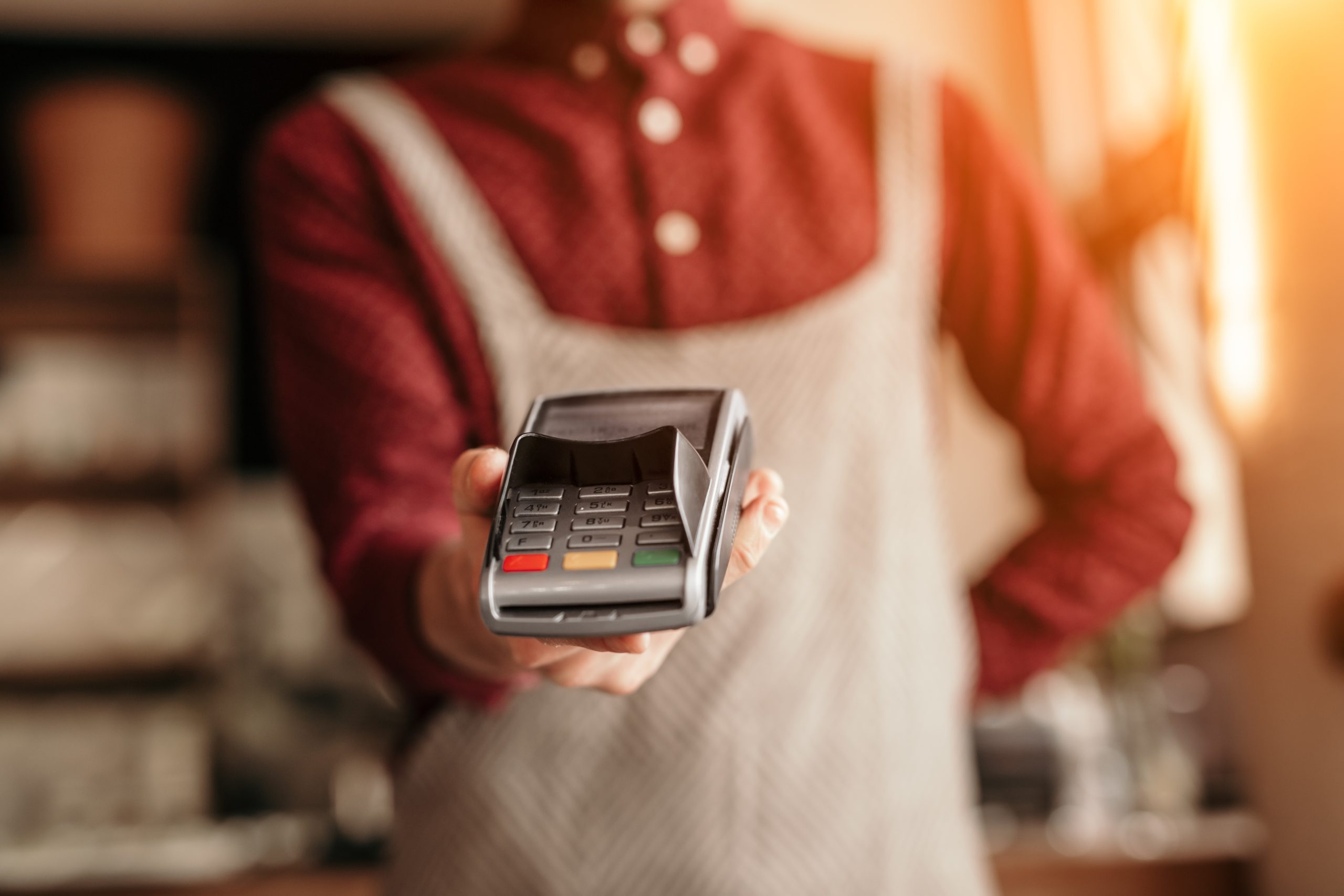
POS (from the English “Point of Sale”) is an automated payment system, which works on portable card machines connected to the internet or a phone line.
One of the main advantages of POS is mobility. That's because, since it's connected to the network, the card machine can be brought right to the customer, providing much more convenience when it's time to pay.
Because they're portable and easy to use, POS machines are widely used by restaurants and bars. They're even an excellent choice for venues that also do delivery.
To use POS as a payment method, you need to negotiate with the acquirers over the processing fees for credit and debit cards.
Acquirers are companies that process electronic payments, such as Cielo, Elavon, GetNet, Rede, Stone, among others.
Depending on the banks you use and how negotiations go, you'll get lower rates for Mastercard cards with one acquirer, while another will offer you better rates for Visa and VR (meal voucher), for example.
So, to accept all the card brands, you'll have to work with several acquirers. Since all the fees for the different card brands are negotiated and set beforehand, the biggest challenge is staying organized about it.
Just imagine: you lock in a good rate with Cielo and, on a packed night, your cashier ends up running the cards through the Rede machine. This can wipe out your profit right on your best sales day.
The problem is ensuring that, throughout your entire operation, everyone will remember which machine to use for each card brand, in order to get the best rate and increase profitability. That's assuming all the machines are available when each customer pays.

Another challenge when using POS is determining how many machines you'll need and which acquirers to work with.
Usually acquirers charge rent per POS machine, and that's where the dilemma lies: how many machines, and which ones, to rent?
Knowing this can be essential to improving service at your business. Every minute a customer has to wait to pay the bill lowers the chances they'll come back.
That's why, if you choose POS, try to find out which card brands are the most used at your venue. Isso pode ser crucial para o sucesso do seu negócio!
What is TEF?
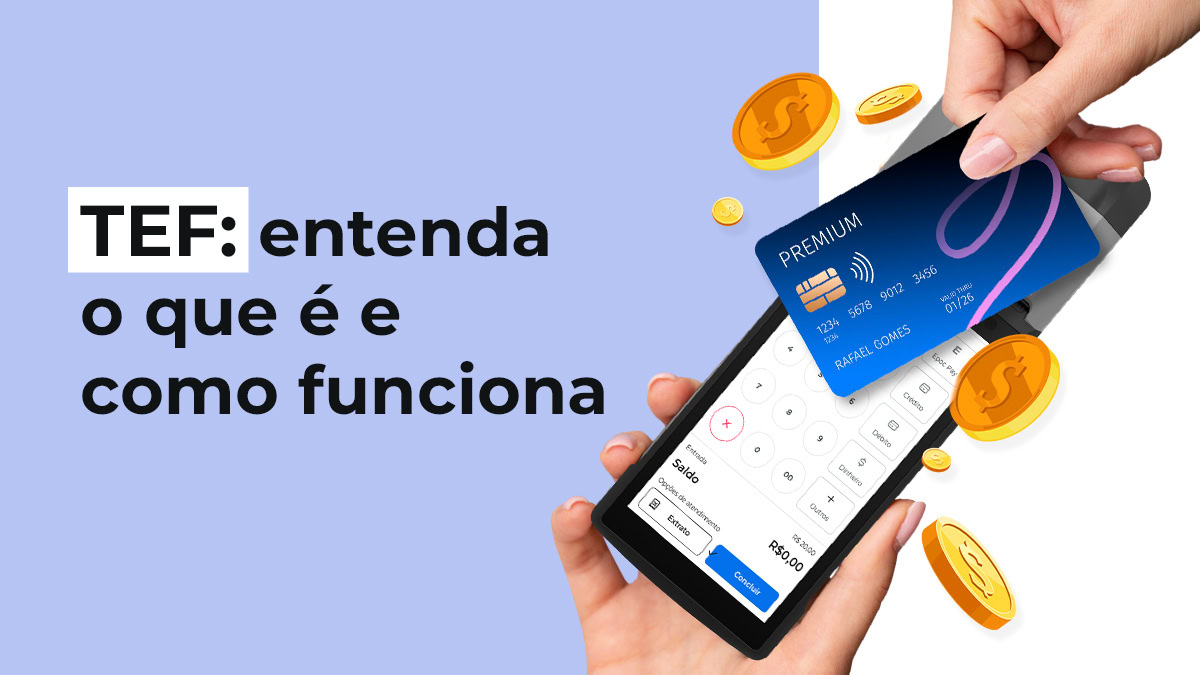
TEF is the acronym for Electronic Funds Transfer. Like POS, it's a payment system that works on a card machine.
Despite this similarity, there are many differences between TEF and POS that should be considered when choosing.
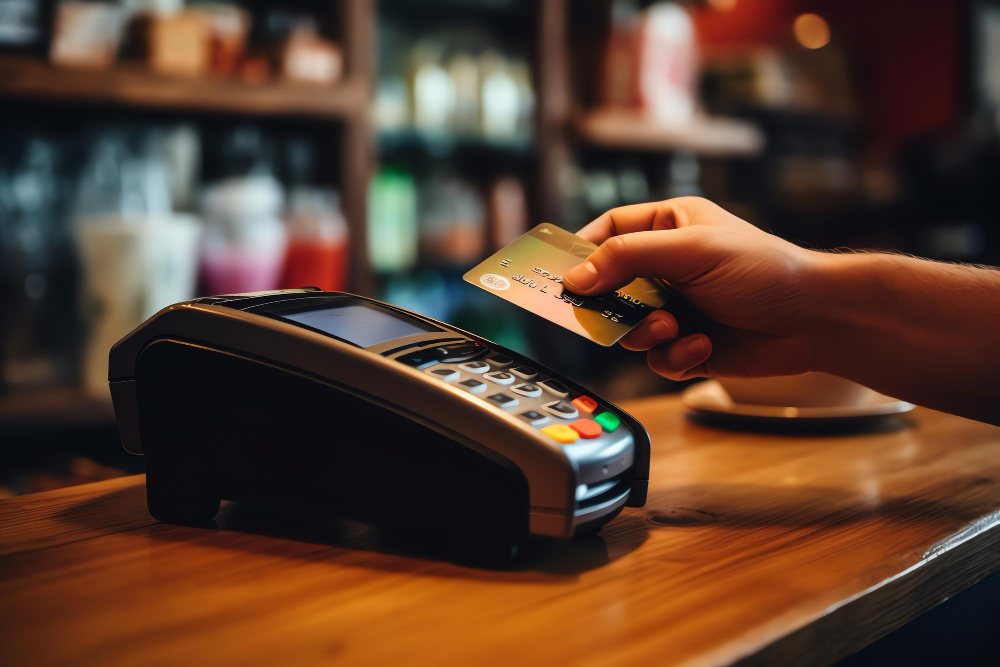
The first difference is about mobility. Unlike POS, TEF isn't portable. A maquininha must stay in a fixed location and connected to the computer. In other words: to make the payment, your customer will have to walk over to the register.
Also, unlike POS, TEF is multi-acquirer. Isso significa que você pode trabalhar com diferentes adquirentes em uma mesma maquininha.
This is advantageous because you don't have to pay rent on multiple card machines, reducing operating costs. Another advantage is that the system records the fees you pay for each card brand, whether credit, debit, or VR, from the acquirers you negotiated with.
This way, the acquirer you set to process payment for a given card brand will always be selected automatically whenever it's used. No fim das contas, isso pode representar uma grande economia com pagamento de taxas.
Finally, TEF also includes bank reconciliation, which makes recording and checking sales much easier. That's why it's a recommended solution for venues with a high sales volume.
Difference between TEF and POS: which one is better, after all?
We've seen how the TEF and POS systems work and what the differences between them are, but which is better for your venue?
To make this decision, consider your business's needs. In general, POS is recommended for those who need mobility, making payments more convenient.
TEF, on the other hand, is better if you have a high sales volume and want the benefit of automating the choice of which acquirer to use, reducing operating costs.
See below how a commercial automation Since the EPOC system can boost the benefits of TEF and help you keep track of your business's results.
EPOC: more control and visibility over your payment methods
Usually, you hire someone who spends whole days trying to do the bank reconciliation. This person is responsible for:
- Counting how many payments were made by credit or debit;
- Knowing when the payments will land in the account;
- Identifying which card brands were used to pay and which machines were used to charge.
Everything has to be organized so it's possible to check whether the fees are being withheld correctly. Now, imagine this person's job of closing out the register.
With a commercial automation system, you'll no longer need to do this manually.
Depending on the software you hire, the payment process can generate all kinds of data and reports, and you only have to worry about analysis and planning.
These reports available depend on the commercial automation system you hire. Some software has the basics, but there are also more complete ones, such as EPOC.
With it, you can remotely access and view all the banking information from that day's operation. Você pode track in real time how many people are in your venue, which cards are being used, revenue, and much more.
You can, for example, see exactly how much you're paying in fees to each acquirer and how much that represents of the total volume of capital generated.
You'll also have reports such as:
- Profit share of the products sold;
- Employee efficiency;
- Comparison of daily, weekly, or monthly sales volume;
- Customer list by gender, average ticket, and consumption habits.
Finally, you can also adopt EPOC PAY to bring together all payments with immediate reconciliation. With it, you have full control of your receivables and cut your operating costs.
If you're interested, schedule a conversation with our consultants and learn how EPOC's solutions can help your restaurant or bar improve its results!