Gastronomy: A Fresh Start for Refugees
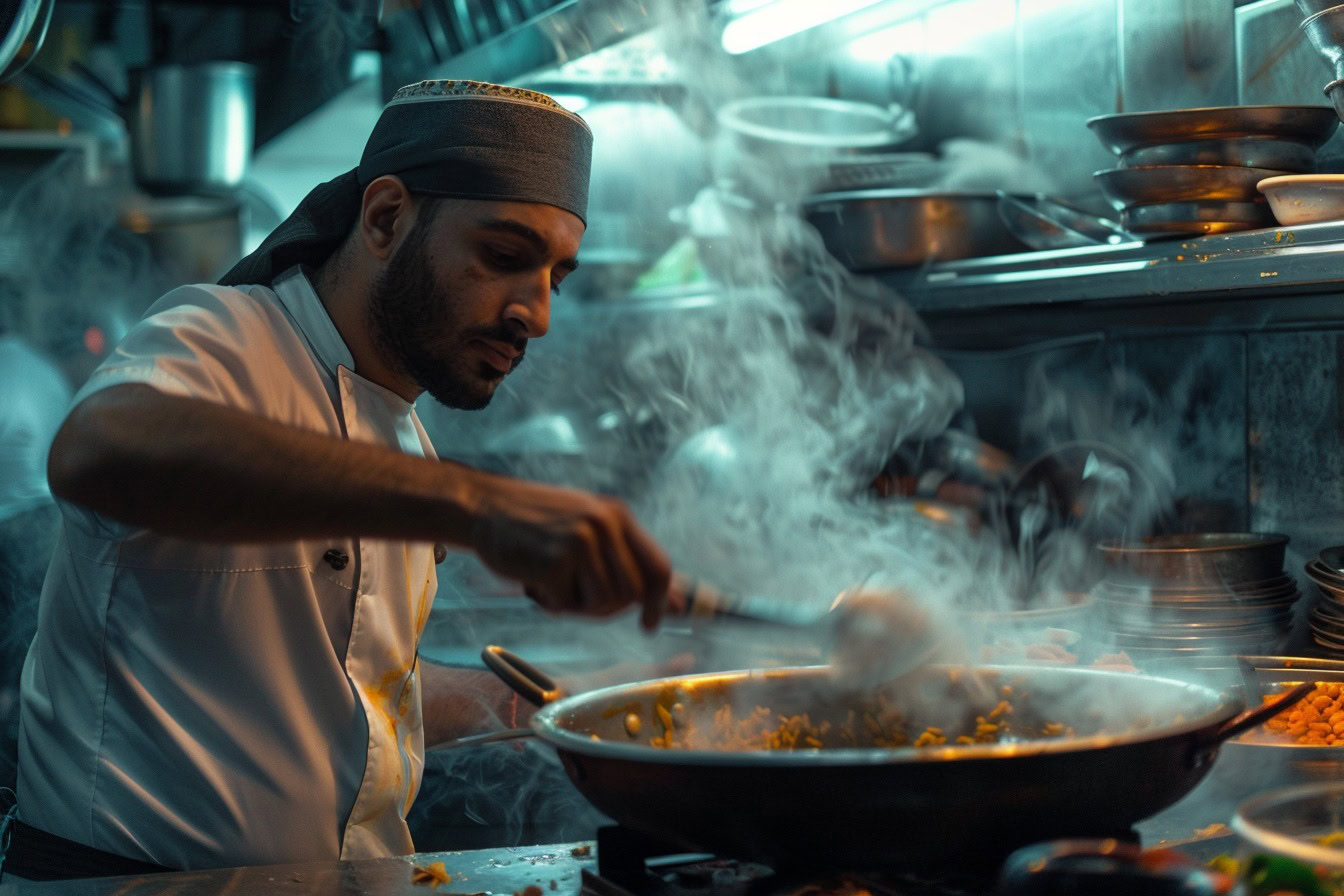
For many foreigners, food entrepreneurship has become more than a simple source of income; it's a bridge to a new life and a new identity in a foreign land. According to recent Sebrae data, Brazil is currently home to 74,200 Individual Microentrepreneurs (MEI) of various nationalities, 4% of whom work in the out-of-home food sector.
For the president of Abrasel's Board of Directors, Rosane Oliveira, the out-of-home food sector works as a catalyst for diversity and inclusion by embracing foreigners who want to start a business. “By opening the doors to entrepreneurs from diverse backgrounds, the sector enriches its culinary offering, in addition to promoting a culture of inclusion and acceptance, which is essential for the development of connected communities” Rosane says.
“Here it's crucial to emphasize Abrasel's commitment to simplifying the entrepreneur's journey, aiming to make the experience of foreigners as welcoming and accessible as possible”, the president stresses.
New beginnings for refugees
Myria Tokmaji and Billal Azizi are witnesses to this phenomenon. Refugees from the wars in the Middle East, the entrepreneurs found in Brazil the possibility of starting over through food.
Myria's family, for example, moved from Aleppo, in Syria, a country ravaged by civil conflict, to Brazil. It was in Curitiba (PR) that they found not only a refuge, but also an opportunity for a fresh start.
In total, 17 members of Myria's family came to the country in 2013. She recalls that, at that time, they left everything behind in search of a new life. At first, the family faced challenges on Brazilian soil.
“We soon realized we were facing new challenges: integrating into the job market, learning the language and building new friendships. Every aspect of daily life turned into a big challenge, every detail presented a new difficulty to overcome” Myria says.
After almost a year struggling to survive financially in Brazil, Zuka Khouri, Myria's mother, timidly started selling esfihas to the neighborhood and at fairs, running a small business. That's how Yasmin Comida Árabe was born.
“It was a real mission to find fairs and events where my mother could work, and we, as a family, would come together on weekends to support her. My brother, my sister-in-law, my father – all of us went with her to the fairs. The first years in Brazil weren't easy” the entrepreneur recalls.
Despite the initial challenges, the family persisted with the business. Brazilians' taste for Arab food began to shape Myria and Zuka's venture. The entrepreneurs started serving dishes typical of Aleppo at parties, dinners and cafés. The business took shape and won customers over. Today, with the venture well established, dishes such as esfihas, falafel balls, kibbeh and kafta are part of the varied delivery menu offered by Yasmin Comida Árabe.
“Food played a crucial role in our journey of adaptation and starting over, especially considering our difficulty with the language. Cooking sustains us and serves as a bridge to connect us with Brazilian culture” Myria emphasizes.
For the family, food entrepreneurship was essential to starting over in a new country. Beyond providing a source of income, Yasmin Comida Árabe became a cultural link between Syrian tradition and the local community.
Myria's story resembles that of Billal Azizi. In an interview with Estado de Minas, the Afghan says he arrived in Brazil just eight months ago, after fleeing Afghanistan when the country was taken over by the terrorist group Taliban. Once in Belo Horizonte, the capital of Minas Gerais, Billal and his family started selling Afghan food through delivery.
Initially, he arrived in Brazil with only his mother and his wife, but Billal's move to the country sparked other relatives' interest in rebuilding their lives somewhere else. Now, eight family members have already left Afghan soil and live in the capital of Minas Gerais.
Billal Azizi reports that he arrived in Brazil on a humanitarian visa, valid for 180 days, after the fall of the Afghan government and the rise of the Taliban. Once the visa expired, the family had roughly 90 days to report to the Federal Police and complete the registration of their asylum or humanitarian residence request.
In Afghanistan, the entrepreneur worked selling cars, and was also a political activist. In Brazil, Billal Azizi saw in food the chance to get back on his feet financially. Together with his mother and his wife, the Afghan opened Cozinha do Azizi in February 2024. Azizi's menu, features dishes typical of Afghan Persian cuisine, such as the falafel sandwich, samosa – a pastry stuffed with meat and vegetables – and kabab sina morgh, which is a grilled meat skewer.
In an interview with Estado de Minas, Azizic shared that the primary motivation behind opening a new business was not only to provide for his family, but also to preserve his identity and build a new story on Brazilian soil.
Azizic and his family bring their ideas together and work side by side at every stage, from preparing the dishes to managing the businesses. Now, their plan is to open a space to welcome customers in person. He emphasizes his desire to share the hospitality and generosity he brought with him from Afghanistan.