
How to Price a Product: Step by Step

It's very common to make pricing mistakes on a restaurant's menu items, especially when you're just starting out — though plenty of experienced people have doubts too.
The fact is that pricing is anything but easy. You have to weigh a lot of factors to arrive at the right figure. That difficulty can end up hurting your results and, in many cases, it's exactly what keeps the business from reaching good profitability and growing.
So how about learning how to price a product? Keep reading this article to find out more!
Why pricing correctly matters
Before we look at which factors you need to consider when setting your menu prices and understand how to run the calculation, it's worth stressing how important pricing is for a restaurant.
It's fundamental to the financial health of the business. The main benefits of pricing correctly include:
Better profitability
By pricing your restaurant's products and services correctly, you can improve profitability. It's very common to get the math wrong, forget to factor certain costs in and end up in the red — in some cases without even realizing it.
Well-executed pricing ensures that the price charged for each product covers every cost tied to production and operations. With a healthy profit margin, the business takes off.
Competitiveness in the market
Price is a competitive factor in the market, since it directly influences customers' decisions. They'll always weigh the competition when deciding where to eat.
When prices are too high, they can end up driving customers away or, if the quality doesn't match, even cause frustration and dissatisfaction.
When prices are too low, on the other hand, they can give the impression of low quality and raise suspicion among customers. On top of that, they also signal that the restaurant isn't accounting for all its costs and may therefore be losing money.
So striking a balance is essential to compete effectively and attract the audience you want.
Perceived value
Prices also affect how customers perceive value, and they can be a way of positioning yourself.
We can map price ranges to a few categories, according to the kind of experience your restaurant sets out to offer. For example:
- Luxury: high-end dining experience with very high prices.
- Moderate: creates a distinctive experience and charges high prices.
- Family: focuses on the best value for money, with mid-range prices.
- Budget: offers products at the lowest price.
So you should always consider your restaurant's concept and the profile of the audience you want to attract. Prices that are fair relative to the quality of the products and services you offer increase customer satisfaction and the likelihood they'll come back.
Effective cost management
Anyone who prices carefully gets a clearer view of every cost involved. From the ingredients to the operating costs to the taxes.
This makes it much easier to see which costs are weighing most on price and, consequently, on profitability.
From there, the manager can map out more effective strategies, whether by pursuing cost reductions or by rethinking the pricing and whether to keep a given item on the menu.
Financial predictability
A consistent pricing strategy also gives the restaurant financial predictability. With it, you can plan for the long term and build more accurate revenue and profit projections.
In other words: the manager is better prepared to face any crises and more confident about taking the next steps.
How would you like to have all these benefits in the management of your restaurant? Refining your pricing strategy is without a doubt the best thing you can do to reach success.
Now let's look at which points you should consider when pricing a product. Follow along!
9 factors involved in setting prices
Anyone who thinks it's just a matter of adding up the costs and adding on the profit you want is mistaken! As we mentioned, setting prices in a restaurant has to take several factors into account. Check out some of them below.
- Market segment: Type of restaurant, category and target audience.
- Production costs: Every cost involved, from the ingredients to the utility bills, labor, marketing and so on.
- Perceived value: Factors like location, atmosphere, food quality and service shape how customers perceive value and are reflected in the price.
- Competition: What prices your competitors charge, both the restaurants around you and others in the same segment.
- Positioning: How your restaurant positions itself in the market, considering the competition, category and target audience you want to attract.
- Pricing strategies: There are different strategies you can use depending on the moment or the goal, such as penetration pricing, skimming and others.
- Demand and elasticity: Takes into account market demand for the product or service you offer, and also how that demand shifts as prices change.
- Product life cycle: The stage of a product's life cycle can also influence how its price is set. A new dish on the menu might carry a lower price to attract customers, while more popular dishes can get more expensive over time as they become permanent menu items.
- Seasonality and special events: Adjusting prices according to the time of year or specific events. It accounts for swings in ingredient costs and shifts in demand, such as high and low season, for example.
These are the main points that influence how a restaurant sets its selling prices. Next, check out a step-by-step guide to understanding how to run the calculation.
Step by step: how to price a product
There are several ways to calculate the selling price of a product at your restaurant. Some managers use Markup as their indicator, while others recommend COGS — that's the one we'll use in this step-by-step guide.
To reach good profitability, you need to be thorough and also take into account the factors we listed in the previous section
That said, in the step-by-step guide below you'll learn how to price a product at your restaurant.
1 – Create recipe cards
The first step is knowing how much you spend on each recipe on your menu. The more detailed you are, the better. A common mistake is counting only the cost of the ingredients, without factoring in the prep.
When creating recipe cards for your dishes, you'll list every ingredient used in the recipe, the quantities and the corresponding cost of each one. You can also include the yield, the taxes and fees, and the profit margin you want.
That gives you a detailed document to arrive at an accurate production cost and a suggested selling price. But that's only the starting point.
Free tool: Recipe Card Spreadsheet for Restaurants
2 – COGS of your dishes
Another important calculation is Cost of Goods Sold (COGS). It relates what you pay to acquire the ingredients to what you charge for the finished product. It's one of the key indicators for a restaurant.
to calculate the COGS of a menu item , the formula is as follows:
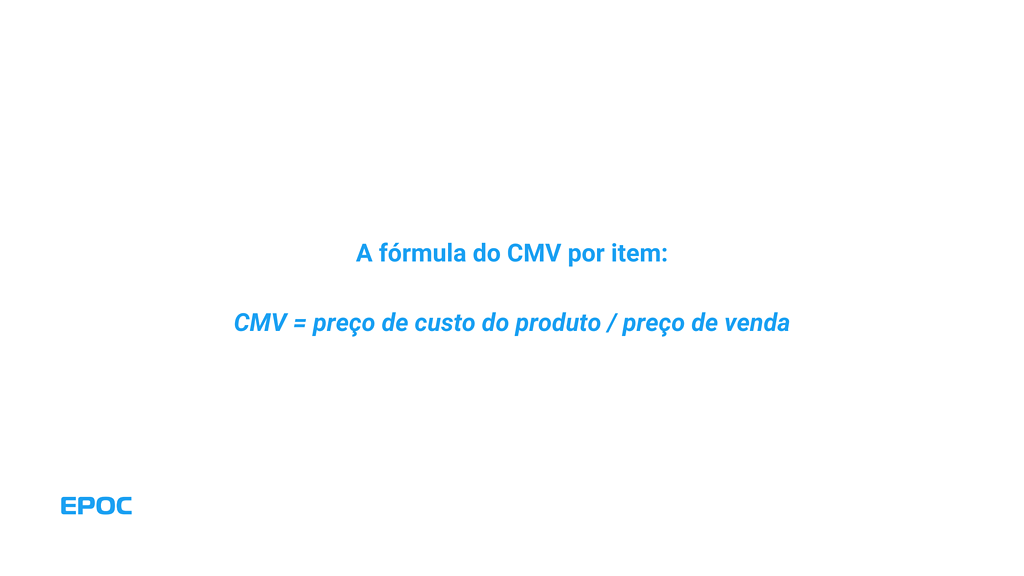
There's no ideal COGS, since it varies a lot from one business to another. That said, it usually lands between 20% and 35%. A COGS of 40%, for example, is considered high for most establishments.
Access for free: COGS Calculator for Restaurants
3 – Projected selling price
From your costs and your target COGS, you can arrive at a projected selling price. For example:
Dish cost/Recipe card: R$ 6.00
Target COGS: 30%
Selling price= Cost/COGS
Selling price = 6/0.3=20
Selling price: = 20.00
This figure shouldn't be the final selling price. It only serves as a comparison baseline against the competition and to weigh other factors in setting the price
4 – Product Mix
Analyzing your product mix is also important for strategic pricing. The product mix. List the quantity of each item you sell on average per month, for example:
Burger: 40
French Fries: 30
Fried Chicken: 20
Then look at the projected selling price and the COGS of each one to identify which items are most advantageous and which need a price adjustment.
For example: if your burger sells more and its COGS is higher, it has a bigger impact on your restaurant's Total COGS. So it's worth revisiting the prices to try to bring that product's COGS down.
By adjusting the Product Mix, you can arrive at an ideal COGS for your restaurant.
5 – Competitor analysis
Finally, to decide the selling price of your menu items, you should analyze the prices charged by your direct competitors.
Consider nearby restaurants with an average ticket similar to yours, even if they don't serve the same type of cuisine. Assess the prices they charge, taking into account the quality of the products served, the atmosphere and the experience.
Then set your price based on that analysis.
If your competitor has a lower price but the quality is below yours, you can charge a bit more. If the competitor is offering better service and products than yours, you should be more cautious with your prices.
By following this step-by-step guide, you can determine the selling price of every item on your menu, taking the product mix into account to arrive at a healthy COGS for your restaurant.
Run tests and make adjustments whenever necessary, revisiting your prices regularly to improve your profitability. Moves like reducing production costs and variable costs can help you perform better.
The role of technology in restaurant pricing
If you've followed the step-by-step guide on how to price a product this far, you've surely noticed that it involves different factors and calculations. That's why relying on technology is essential to be more efficient in this process.
A platform like EPOC lets you create and edit your products' recipe cards with ease, which means you can not only understand your production costs but also keep far more precise inventory control — accounting for down to a spoonful of sugar!
On top of that, you also have records of all your sales and can run complex analyses in a simple, intuitive way, with charts that are easy to read. That way, you can quickly spot your best-selling and most profitable products, which helps you understand your product mix and set your prices.
Technology lets you automate processes, get more visibility into your results, analyze data easily and, ultimately, build far more effective pricing strategies.
If you want to find out how EPOC can help your restaurant, Talk to one of our consultants!