
Restaurant COGS: How to Calculate It

Do you know how much each of the ingredients that make up the dishes sold at your restaurant costs? Tracking this figure is essential to keeping your business financially healthy and staying competitive in such a crowded market.
To help your business keep an eye on these numbers, see how to calculate your restaurant's COGS and find out the best way to keep this data up to date.
Take advantage of our free tool: COGS Calculator for Restaurants
What is COGS (Cost of Goods Sold)?
But first, let's explain more about what COGS is and how it shows up in a restaurant's day-to-day.
The acronym stands for Cost of Goods Sold. Portanto, está ligada à relationship between the purchase cost of your ingredients and how much you charge for the final product. Esse valor é medido como uma porcentagem. Essa informação é importante para saber como fazer o cálculo. Também é por isso que ele pode indicar se algum insumo está muito caro ou, então, se o preço dos seus pratos está muito alto ou baixo.
This way, you understand how much of your revenue is spent buying ingredients and raw materials and you also find out in detail how much each menu item accounts for of that total.
Why does COGS matter for restaurants?
You've probably realized by now that calculating the Cost of Goods Sold is important for keeping your establishment profitable, right? On top of that, tracking this metric can bring other benefits to your business, raising profitability and operational efficiency. Take a look!
Leia também: How to price a product: a complete step-by-step guide
Optimize your budget
Tracking the cost of goods sold helps improve your budget and keep your restaurant financially healthy. That's because it prevents waste and optimizes inventory tracking.
This way you cut back on buying unnecessary ingredients – and on wasting the ones you already have.
Assess your suppliers' cost-benefit
Knowing this indicator also leads to an assessment of your suppliers. Knowing exactly how much each of your dishes costs means you know your ingredient prices inside out and, in turn, understand when something is well above market price.
Optimize the price of your dishes and drinks
It's also an indicator of the price you charge for your products. If it's low, that means you may want to consider raising the price to expand your profit margin.
But, of course, always be careful not to set a price far above what your target audience expects to pay for that particular product.
Keep your expenses under control
Together with recipe cards and inventory control, COGS helps deepen your expense control and understand when everything is in order – or when there's a problem.
The indicator helps you track how much you've been spending on ingredients, on restocking items, on returned orders, and even on your storage systems.
Refined inventory control
Finally, tracking the Cost of Goods Sold helps keep your inventory precisely under control. Como você já viu, o estoque influencia diretamente no CMV, portanto, se você deseja que ele seja um indicador confiável, precisa também cuidar do estoque.
How to calculate restaurant COGS?
Now that you know what this all-important metric is, it's essential to understand how to calculate COGS to ensure your restaurant's profitability.
Generally speaking, there are two ways to do this calculation:
- finding the individual COGS of each item;
- finding the COGS of the entire restaurant over a given period of time.
Let's look at each one below. Keep following along and access our free COGS calculator!
COGS formula for each menu item
This is usually the most efficient way to calculate COGS for restaurants – although it's also the most labor-intensive.
You'll need to run the calculation for each of the items sold at your restaurant, whether they're simply resold (drinks, for example) or made in-house (food and desserts, for instance).
The formula for both calculations is the same:
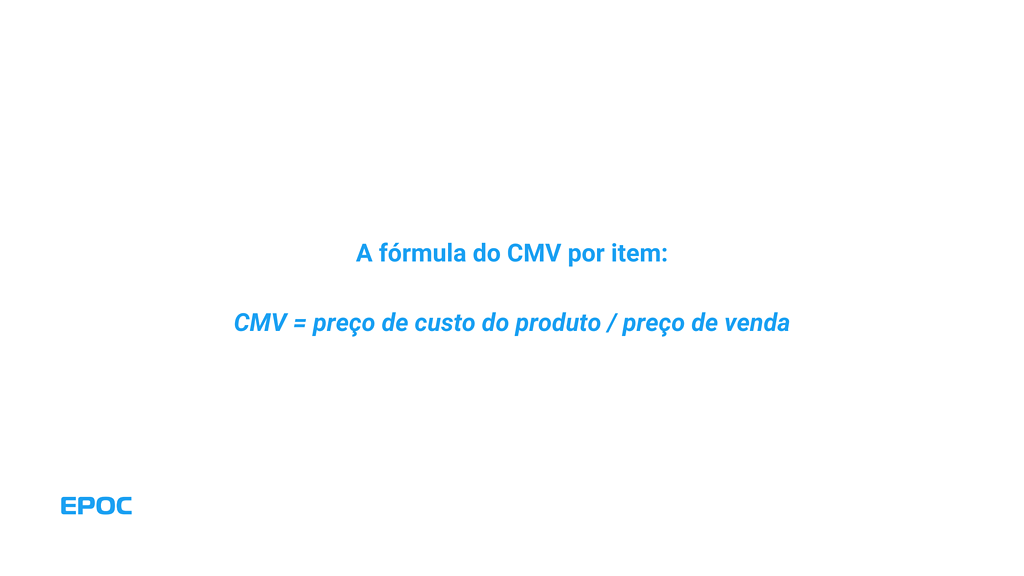
For products that are simply resold, the calculation is straightforward. For example, if you buy a drink for R$ 2.50 and resell it for R$ 5, that drink's COGS will be 50% (2.50 / 5.00 = 50).
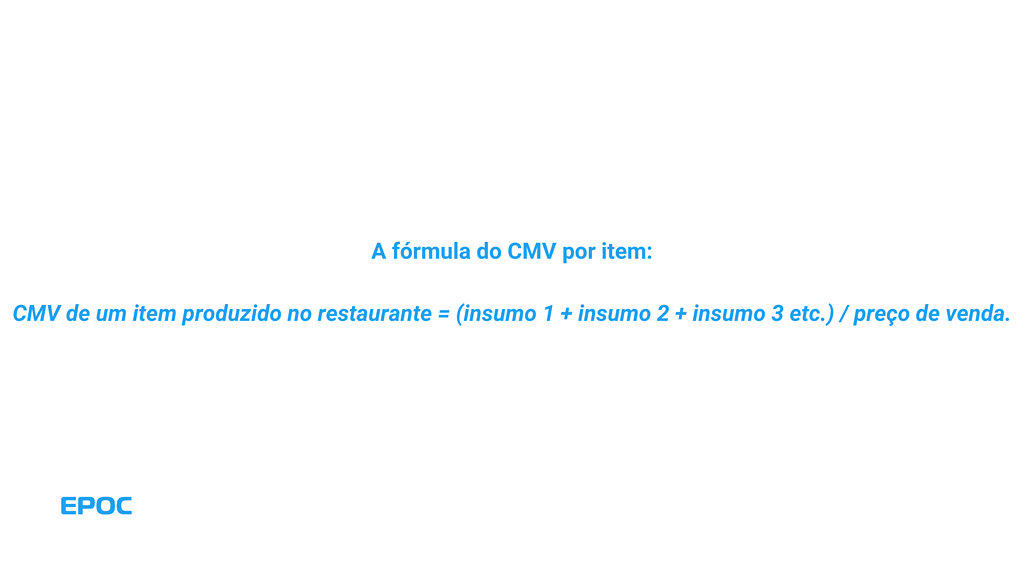
For products made in your restaurant, although the COGS formula is the same, there are more details to take into account. You'll need to add up everything consumed in ingredients, raw materials, and even packaging for each of these products.
In other words, in this case the product's Cost of Goods Sold is made up of the formula:
To make this calculation easier, it's essential to have a recipe card kept up to date for every item on your menu.
This way, you have reliable, up-to-date ingredient prices and, on top of that, you can calculate COGS far more easily – just use the data registered on each dish's or drink's card.
And to make this control even easier, use our free recipe card generator for restaurants and bars!

Restaurant COGS formula by period
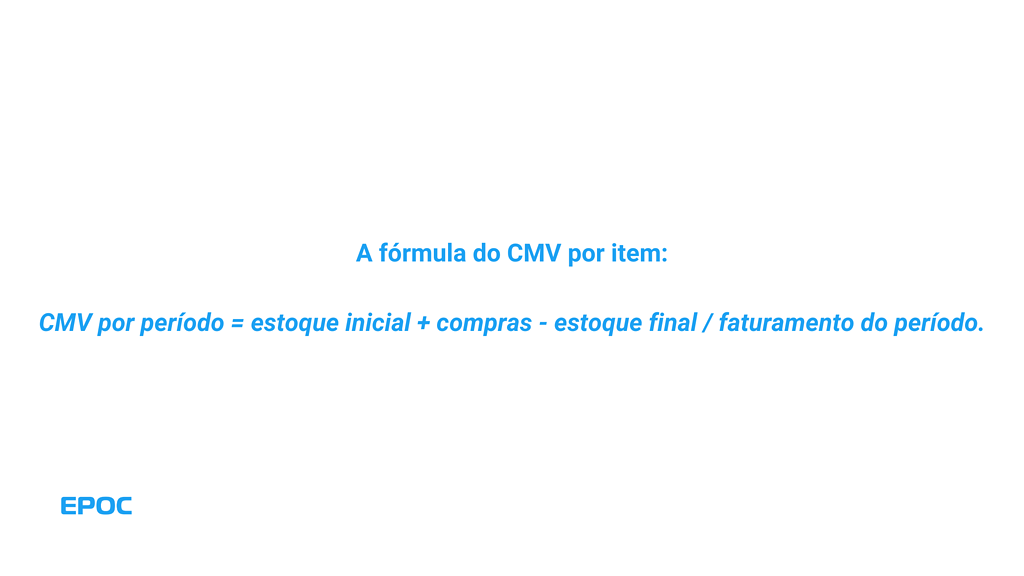
If you'd rather calculate your restaurant's COGS as a whole over a given period (a month, for example), it's important to pay close attention to your inventory, since it's the centerpiece of this calculation.
The calculation formula is different. It's:
Remember that for your COGS to be accurate, it's important to have reliable inventory, cash flow, and revenue controls. After all, this data feeds the indicator and, if the numbers are imprecise, will produce the wrong COGS.
How to reduce COGS? Check out 5 tips!
After running the numbers, one of the main questions is what the ideal COGS figure for restaurants is. There's no single answer to that, since every business has its own specifics.
However, an item's COGS can be considered high when it goes above 35%.
And when the Cost of Goods Sold is high, that hurts the profitability of your establishment, since it means more than a third of the profit generated by an item ends up being spent producing that same item. If that's happening in your business, see how to reduce COGS with the tips below.
1 – Look for cheaper suppliers
One of the factors that can affect COGS is the price you pay for ingredients and raw materials, or even for products that will be resold.
So keep a regular process of reviewing your suppliers' prices and, alongside that, running market research.
This way, you can find cost-cutting opportunities and, on top of that, negotiate prices with your suppliers to bring your COGS down as well.
2 – Control your inventory, preventing shrinkage and waste
As you've probably noticed, inventory has a big influence on COGS. The more items leave your inventory without turning into sales, the worse the indicator gets. In other words: shrinkage and waste cannot happen if you want a healthy COGS.
To achieve this, run recurring training sessions with your staff so everyone knows the best practices for storing and handling ingredients.
In addition, having an inventory control tool helps prevent human error and discourage any shrinkage of items.
3 – Watch the shelf life of your ingredients
Ingredient shelf life is another aspect that needs to be part of your inventory control. It may seem simple and even obvious, but it's quite common for restaurants to suffer from wasted raw materials because their expiration date has passed.
Especially in the case of restaurants, which handle large quantities of perishable ingredients, this tracking needs to be done daily.
This not only keeps your restaurant from throwing money away on materials that can't be used in production, but also prevents making customers sick from eating spoiled food.
4 – Sell more volume of your most profitable items
Even after a thorough check of your inventory and your ingredient prices, your COGS may still be high. One reason for that can be the low profitability of the items being sold.
The most popular dish at your restaurant isn't always the one that brings in the most profit. After all, that depends on the cost of the ingredients needed to prepare that item.
So a good tip is to use engenharia de cardápio to highlight the products that bring in the most profit and that may not be getting the attention they deserve from customers.
With this technique, you can refine your menu so the most strategic items get more prominence.
To learn how to do this in practice, see the infographic on how to apply menu engineering and start applying it in your restaurant right now.
Alongside this strategy, rethink selling those items that aren't very popular and don't bring in much profit. Assim você reduz seu gasto com insumos e matérias-primas sem gerar insatisfação na sua clientela.
5 – Investigate the causes of returns
Finally, a small habit that can make a big difference is understanding why customers send orders back. This can be tied to several factors: mistakes when taking the order, errors in preparation, low-quality ingredients, among others.
So instruct your service team to ask customers the reason for any returns, so you can map the source of the problem – and then fix it.
In this case, recurring training sessions for staff are also great allies, as is having a tool that makes order entry easier and, on top of that, speeds up and improves how they're prepared.
Simplify your management with EPOC
Although it's very important to a restaurant's profitability, keeping up with the COGS calculation for each item can be a big challenge.
Because it involves inventory control, recipe cards, and order entry, this tracking demands synergy between practically every area of the establishment.
That's why the most efficient way to calculate a restaurant's COGS and make sure this metric is always accurate and reliable is to rely on a restaurant management platform, like EPOC.
With this kind of solution, you centralize and integrate recipe cards, inventory control, online menus and tabs, kitchen order management, and even the financial management of ingredient purchases in a single piece of software.
To learn more about how EPOC works in practice and how it can help your restaurant control COGS, Talk to one of our specialists with no obligation.
Frequently Asked Questions
What is COGS?
The acronym stands for Cost of Goods Sold. It's about the relationship between the purchase cost of your ingredients and how much you charge for the final product. This figure is measured as a percentage.How to calculate a restaurant's COGS?
There are two ways to calculate restaurant COGS: finding the individual COGS of each item; or finding the COGS of the entire restaurant over a given period of time.To find an item's COGS, use the formula: COGS = product cost price / selling price.
The COGS calculation for the restaurant as a whole over a given period (a month, for example) uses the formula: COGS per period = opening inventory + purchases – closing inventory / revenue for the period.
How to reduce COGS?
An item's COGS can be considered high when it goes above 35%. That hurts the establishment's profitability.If that's happening at your restaurant, reduce your COGS with the tips below:
– Look for cheaper suppliers;
– Control your inventory, preventing shrinkage and waste;
– Watch the shelf life of your ingredients;
– Sell more volume of your most profitable items;
– Investigate the causes of returns.
What is the COGS formula?
To calculate a product's COGS (Cost of Goods Sold), the formula is: COGS = product cost price / selling price.To calculate total COGS for a given period, the formula is: COGS per period = opening inventory + purchases – closing inventory / revenue for the period.