
Kitchen Brigade: Roles and Responsibilities
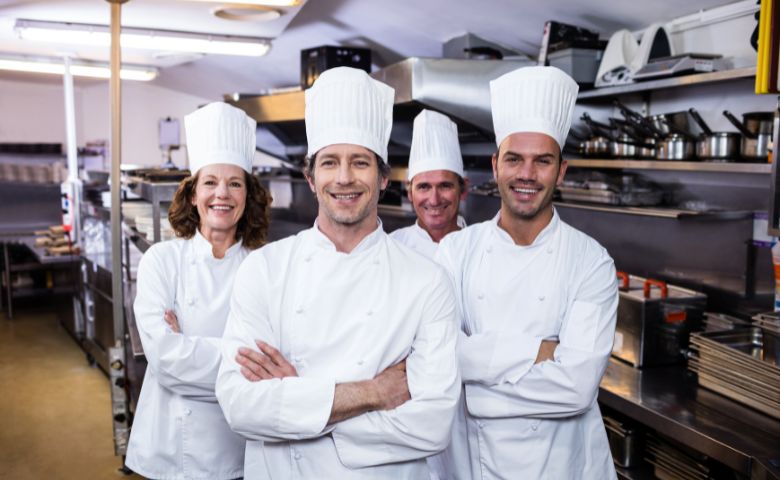
The kitchen brigade is a team hierarchy system that helps restaurants achieve greater organization and productivity when preparing food and drinks.
This is essential to deliver an excellent customer experience, getting orders out with quality and speed.
So if you are putting together your kitchen team, be sure to read this article! In it we will look at the roles and responsibilities, how the org chart works and some tips for boosting productivity. Read on!
What is a kitchen brigade?
The kitchen brigade is a hierarchical team system used in restaurants all over the world. It was created by the French chef Georges Auguste Escoffier, inspired by the hierarchy of military kitchens.
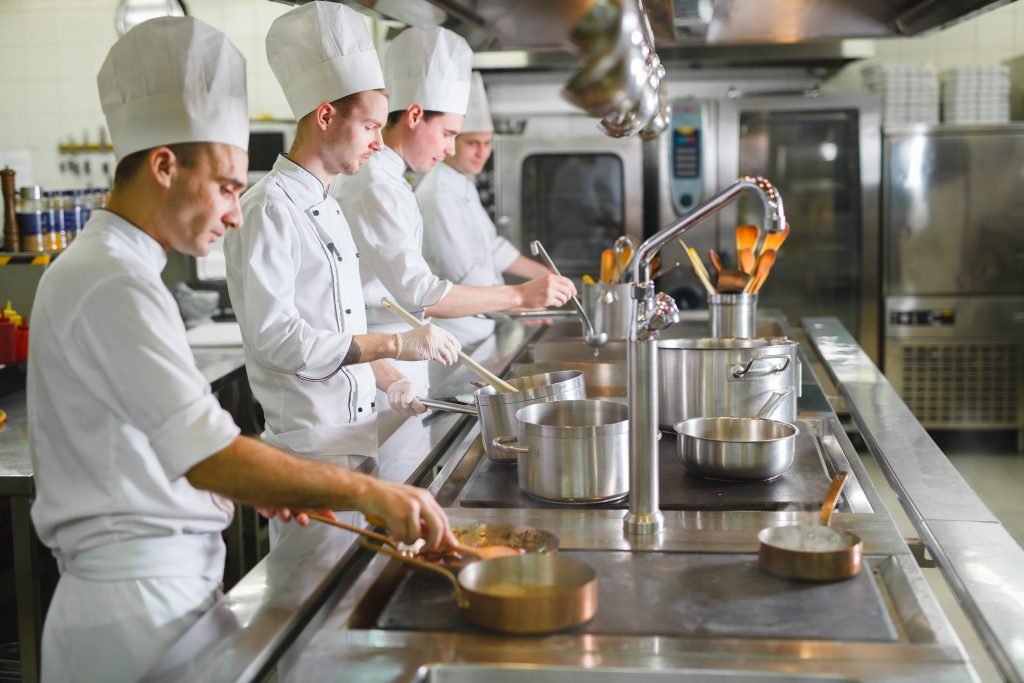
In this model, the space is organized into workstations and production is divided into parts, with responsibilities distributed among the members of the brigade. The org chart includes the roles of chef, Sous Chef, Chefs de Partie and many others, as we will see below.
Each team member is therefore assigned a task according to their level in the hierarchy: washing the dishes, organizing the orders, handling specific preparations, supervising the team, among others.
This makes it possible to ensure efficiency and quality when producing orders. Beyond these, there are other benefits to adopting the kitchen brigade in restaurants. Take a look below.
Why use this system?
If you have ever walked into a restaurant kitchen, or even watched a movie that portrays the work in that environment, you know it can be pretty chaotic.
With new orders coming in every minute, different recipes and little time to prepare them, it is very easy for everything to turn into a mess. Putting an end to that scenario is the main goal of kitchen brigades.
Among the benefits we can mention:
- Better organization of the kitchen space
- A well-defined production process
- Reduced order preparation time
- Avoids duplicated tasks and rework
- Standardized recipe production
- Higher quality in the dishes and drinks served
- Fewer errors in orders
- Well-being of the team members
- Less food loss and waste
- Guaranteed Food safety
In other words: the kitchen becomes far more productive and that has a direct impact on customer satisfaction, because the quality of service is much higher.
Leia também: 7 reasons to adopt a KDS monitor in your restaurant
What are the roles and responsibilities in the kitchen?
The kitchen brigade system has a long list of roles and responsibilities, which is why it is more common in restaurants with a large team. That said, it can also be adapted to smaller teams for more efficient organization.
In fact, the classic brigade has already gone through changes, and the modern brigade has a leaner, simpler org chart. Below are the main roles and responsibilities of a professional kitchen.
The classic kitchen brigade
As we have seen, a classic kitchen brigade follows a specific hierarchy, with different roles and responsibilities, each one playing a crucial part in the kitchen’s operation.
Check out the roles and responsibilities in order of hierarchy below.
Chef de Cuisine
- Responsible for the entire kitchen operation.
- Menu planning.
- Supervision of all activities in the kitchen.
Sous Chef
- Sous Chef, assists the Executive Chef.
- Direct supervision of daily operations.
- Training of brigade members.
Chef de Partie (Station Chef)
- Chef responsible for a specific station in the kitchen.
- Preparation and supervision of the dishes from their station.
In addition, some station chefs take on specific roles, such as:
- Saucier: Prepares sauces and hot garnishes.
- Poissonnier: Responsible for preparing fish dishes.
- Rotisseur: In charge of roasting and preparing meats.
- Entremetier: Responsible for vegetable dishes, soups and side dishes.
- Legumier: Focuses on preparing vegetables.
- Garde Manger: Handles salads, appetizers and cold presentations.
- Patissier: In charge of producing desserts and pastries.
Demi-Chef de Partie (Station Assistant)
- Assists the Chef de Partie.
- Responsible for specific tasks at a station, acting as direct support.
Commis Chef (Station Helper)
- Apprentice, assists the Chef de Partie and Demi-Chef
- Responsible for basic preparation tasks, such as cutting ingredients, mise en place (putting everything in order) and operating utensils.
Tournant (Roving Chef de Partie or General Cook)
- Fills gaps at different stations as needed.
- Comprehensive knowledge of all the stations.
Plongeur (Kitchen Assistant or Dishwasher)
- Handles the general cleaning of the kitchen.
- Washes dishes and utensils.
Aboyeur
Finally, there is the role of Aboyeur. This is an important position in the classic kitchen hierarchy, although its function is more related to communication than to direct culinary execution.
They act as a communication bridge between the kitchen team and the service team, taking the customers’ orders and passing them along to the kitchen efficiently.
The modern kitchen brigade
As the organization and operation of kitchens evolved, brigades changed too. Modern restaurants no longer use the same system created by Escoffier.
While classic brigades are divided into specific stations with a rigid hierarchy and extremely specialized roles, modern kitchen brigades offer greater flexibility and a less rigid hierarchy, with chefs who can work across different roles.
The role of the executive chef also stands out: they act as a collaborative leader, encouraging innovation and the development of the team.
In general, communication is more open and chefs who are just starting out have more opportunity to take an active part in preparing the dishes and to handle more important tasks.
The teams also tend to be leaner and more versatile. Isso porque, com a globalização da gastronomia, os chefs precisam se adaptar a uma variedade de influências culinárias. Assim, os cargos não são tão especializados quanto na brigada de cozinha clássica.
Learn more: Hiring a restaurant team: how to get the selection right
Tips to boost productivity in the professional kitchen
Organizing your kitchen team using the brigade system is the first step toward greater productivity. However, a few other measures can also go a long way toward making the team more efficient and helping them deliver quality work.
Having well-defined processes is essential for production to flow smoothly. Everyone must be clear on each step and on their own responsibilities. For that, regular training of the team is also very important.
Another aspect that helps boost productivity is the physical space and the Equipment used. So make sure all your work tools are well organized and well maintained.
Finally, technology can be a great ally. Using a KDS system integrated with the POS, for example, makes it easier to organize the kitchen, distribute tasks and track orders.
With EPOC KDS you can have screens at each station displaying the order items that need to be prepared, with priority indicators, a timer and alerts. That way, your team does not waste time and can focus on what they do best: cooking.
If you want to learn more about how we can help your restaurant, talk to our specialists. Nossa plataforma conta com todos os recursos que seu restaurante precisa para ter mais eficiência e lucratividade.