Food Safety: Good Practices
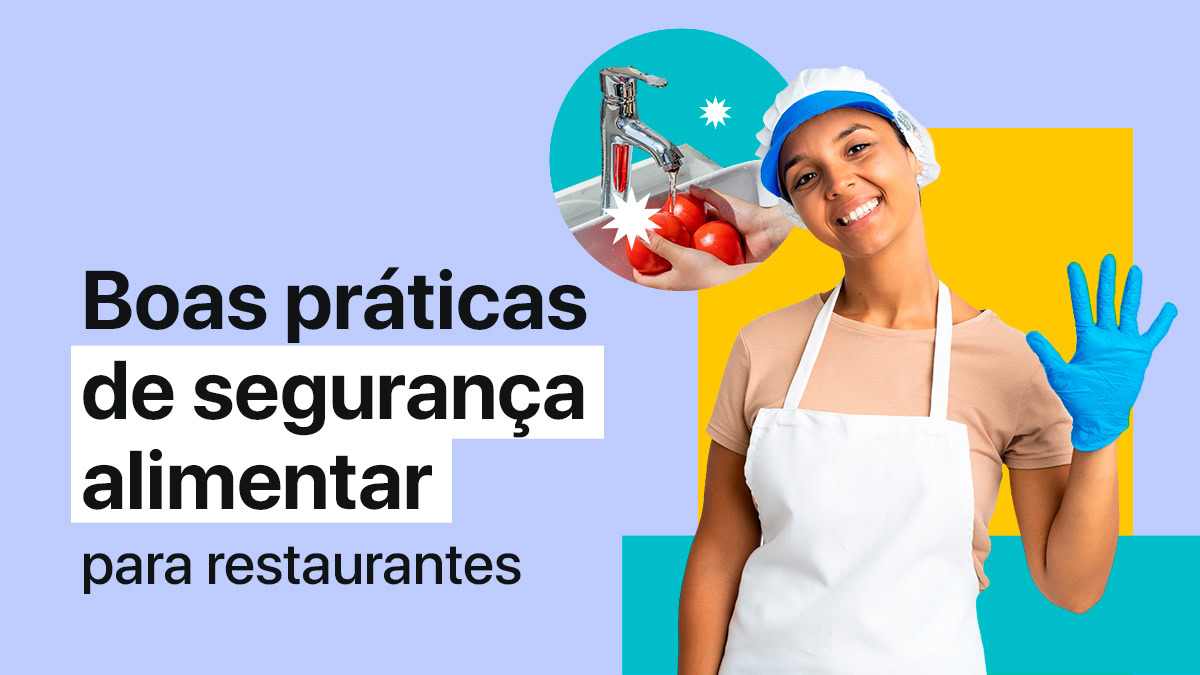
Good hygiene and food safety practices are indispensable in a restaurant. In addition to maintaining the quality of the products offered, they also serve to protect customers' health and comply with health regulations.
In this article, get a better understanding of what food safety is, why it matters, and a list of the main actions and routines recommended for restaurants. Follow along!
What is food safety?
Food safety is a concept that refers to the various practices carried out to ensure food is safe for human consumption. In other words: that it's free of contamination and poses no health risks.
This involves the entire food chain, from growing and production to preparation and final consumption.
Its goal is to prevent foodborne illnesses (DTAs), caused by harmful microorganisms present in food — such as the E. Coli bacteria, for example. DTAs can cause anything from mild symptoms, like diarrhea and nausea, to severe cases that require hospitalization.
In addition to affecting customers' health, a contamination outbreak can also cause financial losses and hurt a restaurant's reputation. So food safety should be a management priority. Keep reading to learn more!
How important is food safety in restaurants?
Following good food safety practices in restaurants is essential for several reasons. Among them we can mention:
- Public health: part of the food chain, restaurants share the responsibility of preventing DTA outbreaks and protecting public health.
- Food quality: good practices ensure food preserves its sensory and nutritional characteristics, providing a more enjoyable dining experience.
- Competitiveness: food safety becomes a competitive edge in the market, attracting customers who look for trustworthy establishments committed to health.
- Business reputation: a restaurant with a history of food safety problems can suffer irreparable damage to its image, losing customers and facing legal penalties.
- Compliance: good food safety practices are also necessary to meet the standards of the Agência Nacional de Vigilância Sanitária (ANVISA), avoiding fines.
So food safety has an impact on several aspects of the business.
It's management's responsibility to build processes that ensure the establishment's hygiene and food safety, guiding the whole team so they're followed to the letter. Among the points that should be observed are:
- Cleaning of all areas of the establishment
- Proper food storage
- Correct use of kitchen equipment and utensils
- Personal hygiene of food handlers
- Tracking and quality control of suppliers
- Pest control
- Water quality
- Waste management
Below, check out some of the food safety good practices to apply in your restaurant.
Food safety good practices in restaurants
The best way to ensure food safety in your restaurant is to follow the ANVISA good practices guide, created based on RDC 216. It provides some guidelines for food service operations. Check out the main ones below.
Cleaning and sanitizing
Keeping the restaurant environment, utensils, and equipment clean and sanitized is essential for eliminating microorganisms and preventing pests. To that end, some recommended precautions are:
Infrastructure maintenance
- Floors, walls, and ceilings should be well maintained, with no cracks, leaks, mold, etc.
- Windows should have screens to keep insects out.
- There must be a sewage system or septic tank. Grease traps and sewage boxes need to be located outside the food preparation and storage area.
- The water tank must always be well maintained and covered. It needs to be washed and disinfected every 6 months.
- Light bulbs must be protected against breakage.
- Countertops and tables that come into contact with food must always be in good condition, with no cracks, chips, or other defects.
Cleaning the space
The work environment should always be clean and organized. Sanitizing needs to be done whenever necessary to prevent the buildup of dirt, which can cause microorganisms to multiply.
It's important to use cleaning products approved by Anvisa. These products can't be stored together with food, to avoid contamination. So keep a cabinet dedicated to them alone.
Temperature control
Storing and preparing food at the right temperatures prevents the proliferation of microbes that are harmful to health. They multiply at temperatures between 5ºC and 60ºC, known as the danger zone.
That's why it's essential to control food temperature, keeping refrigerators always below 5ºC and preparation equipment and buffets always above 60ºC.
Food storage
Proper storage is also crucial for food preservation. Follow these recommendations:
- Keep storage areas always clean, organized, ventilated, and protected from insects and pests.
- Don't use or buy products whose packaging has any kind of defect (bloated, dented, torn, or dented, for example)
- Always store frozen and refrigerated food immediately. It shouldn't be left out of the refrigerator or freezer for long periods.
- Clean packaging before opening it. If you don't use it all, store it in clean containers labeled with the expiration and preparation dates.
In addition, it's essential to watch the expiration date of all stored supplies and maintain efficient controle de estoque to avoid losses.
Leia também: 15 tips on how to organize a restaurant inventory
Food handling
Food handling and preparation require extra care, with special attention to the health and personal hygiene of the people involved. The main guidelines are:
- Wear hair tied back and covered with hairnets or caps. No beards.
- The uniform should preferably be light-colored and always clean. It should be worn only in the preparation area and changed daily.
- No makeup or accessories such as earrings, bracelets, rings, wedding bands, necklaces, and watches.
- Keep nails short and free of polish.
- Get regular health check-ups. Don't handle food if you're sick or have cuts and wounds.
In addition, you need to take care when preparing food, such as:
- Wash your hands thoroughly before handling food. If you do anything else, like going to the bathroom or answering the phone, you need to wash them again.
- The sink for washing hands can't be the same one used for washing dishes.
- Be careful not to sneeze, cough, talk too much, or touch other objects while preparing food.
To maintain these good practices in food preparation, it's essential to provide staff training and create documents indicating what the correct procedures are. Making the team aware of how important these precautions are for food safety is the most effective way to ensure they're kept up.
Preventing cross-contamination
Raw meat and unwashed vegetables can transmit microbes to already-cooked food, causing cross-contamination. To prevent it from happening, you need to take some precautions such as:
- Never use the same utensils (knives and cutting boards, for example) to cut raw meat and then already-cooked food. For example: cutting a raw chicken and then using the same knife to cut a piece of roast beef.
- Avoid contact between raw and cooked food.
- Always wash your hands thoroughly after handling raw meat and unwashed vegetables.
Pest control
Keeping all areas of the restaurant clean is indispensable for controlling pests like cockroaches, ants, and rats. Avoid the buildup of dirt and trash, and keep storage spaces always clean.
If it's necessary to apply any kind of poison to fight pests, this should be done by a specialized company, since the products used for it can be toxic and contaminate food.
Waste management
Correct disposal of trash and food scraps prevents the proliferation of microorganisms. To avoid contamination, the recommendations are:
- Have trash cans with lids and foot pedals in the kitchen.
- Always sanitize the trash cans.
- Take trash out of the production area to the outside of the establishment in tightly closed trash bags.
- Always wash your hands after touching trash.
These are the main good practices for ensuring food safety in your restaurant.
To make sure they're actually carried out, it's important to create a Good Practices Manual and Standard Operating Procedures (SOP). These documents are a reference for executing processes and support team training.
Count on EPOC to manage your restaurant
Technology can support management in several areas, including food safety. Having an efficient inventory control system, for example, makes it easier to monitor expiration dates and helps avoid losses and waste.
EPOC is a platform for restaurants that, in addition to handling inventory control, also lets you speed up service and simplify management with POS, ERP, self-service solutions, and much more.
To find out how we can help your restaurant, fale com nossos consultores.