Menu engineering: a complete guide to selling more

For a restaurant or bar to succeed, having a well-crafted menu is just as important as providing excellent service. It's like a shop window, and it should be built not only to help customers choose, but also to increase sales.
Including a variety of dishes and drinks, being organized, having quality images, clearly describing each item and listing prices correctly is the basic that any establishment does. But you can go further by applying engenharia de cardápio.
This technique is used to create more attractive and profitable menus. To learn everything about it, keep reading this article!
What is menu engineering?
Menu engineering is a method developed in 1982 by Donald Smith and Michael Kasavana, of the School of Hospitality Business at the University of Michigan (USA), with the goal of improving menus to make them more attractive and increase the profitability of restaurants and bars.
To do this, a sales performance analysis is carried out for each item over a period of time. It takes into account the Profit margin, the contribution to total sales and also popularity.
This makes it possible to identify the items that are most advantageous for the restaurant or bar and, from there, rearrange the menu to highlight them. This way, what's most profitable gains greater visibility.
On top of that, concepts from psychology, design and marketing are used to optimize the menu, make it easier for customers to choose, encourage purchases and sell more. Among the aspects that are looked at are, for example:
- Layout
- Colors
- Fonts
- Photographs
- Item names
- Descriptions
- Posicionamento
Want to know how to apply these improvements to the menu of your restaurant or bar? Then keep reading!
How does this method work in practice?
To analyze the menu items and identify which are the most profitable, the Smith-Kasavana method considers the popularity and a margem de contribuição of each item, forming a matrix divided into four quadrants.
Popularity is the sales volume — in other words, the menu items that move the most, the customer favorites.
The contribution margin is the amount left over after all production costs and variable expenses are deducted from the sale price. It determines how much each item individually contributes to profitability and to covering the company's costs.
We'll show you how to calculate these variables in the step-by-step section further on. So keep reading!
Menu Engineering Matrix
After calculating the popularity and contribution margin for each item, it's time to analyze which are the most profitable and decide how they'll be laid out on the menu.
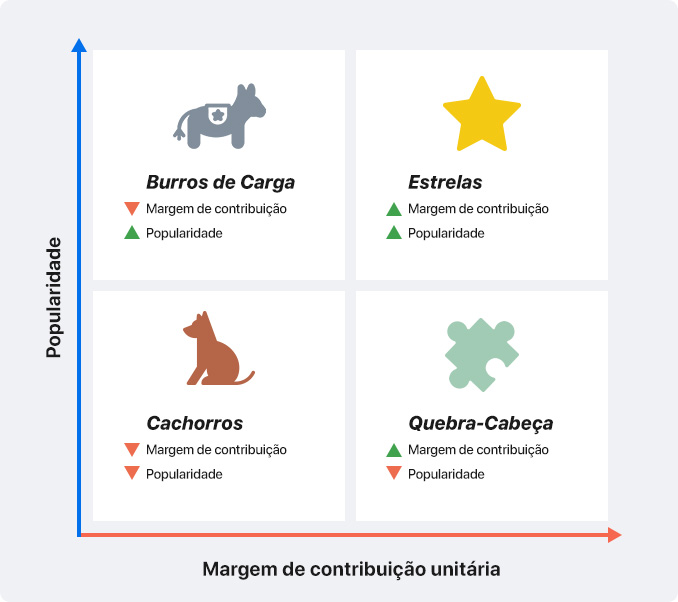
For this, a matrix made up of four quadrants is used: stars, plow-horses, puzzles and dogs. Understand each of them below.
Classifying the menu items
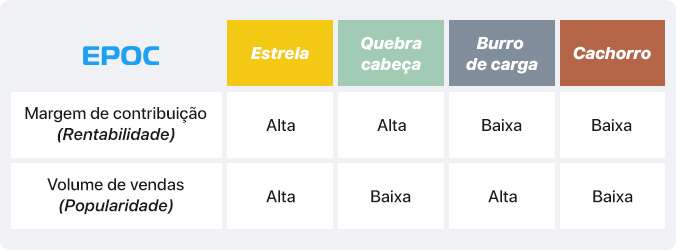
Each item should be classified based on its popularity and contribution margin relative to the average:
Stars
These are considered the best items, because they sell a lot and bring in a lot of profit. You need to pay attention to the “bring in profit” part.
Your most popular item won't necessarily generate the highest profit rate, so Star dishes/drinks may not be the most ordered, but they do need to be among the most ordered and also deliver high profit.
Plow-horses
Plow-horse items are the ones that sell a lot but don't generate much profit. For example, french fries may be very popular with your customers, but they don't bring in as much profit because the raw materials for preparing them drive up the production cost.
That's why they don't need to sit in the prime spots on the menu – your customers already know them and, besides, they don't bring in that much financial return.
Puzzles
The Puzzles category holds those items that don't sell much but are profitable.
That's exactly why they're puzzles: you need to figure out a way to increase their popularity, since they bring in good profit. One tip is to place some items from this category in the prime spots on the menu.
Dogs
Finally, a Dog is a dish/drink that sells little and isn't very profitable. In other words, these are the items that are neither popular nor bring financial return to your establishment.
So try to keep them away from the prime spots on the menu and think about new recipes that could replace them, or ways to boost their sales (with promotions, for example).
What are the advantages for restaurants and bars?
Now that you know how menu engineering works, check out some advantages of using this tactic in your restaurant or bar, and then learn how to do it step by step!
Increase sales and profitability
The main goal of menu engineering is to increase a restaurant's profitability. So that's the big advantage!
With this analysis you can identify the best-selling items, review costs, prices and profit margin and, with that, implement smarter, better-informed strategies to increase sales, as we've already seen.
Leia também: How to calculate restaurant COGS
Simplify the decision for customers
With a better-organized menu, customers order faster. Besides highlighting items and making the decision easier, an optimized menu also has clearer descriptions, avoiding doubts.
This may sound simple, but in the day-to-day of a restaurant or bar, it makes all the difference:
- Speeds up the operation
- Avoids wrong orders
- Minimizes waste
- Maximizes the number of orders placed
- Reduces time spent at tables
Standardize the menu's visual identity
Just like the walls, tables and other physical spaces of your restaurant or bar, the menu is also a communication touchpoint where the visual identity of your brand must be present.
Use it to build customer loyalty, strengthen recognition of your establishment and spread the values and identity of the bar/restaurant.
This keeps you from having several different menu formats that confuse customers, and it also conveys a sense of professionalism and refinement – so important in this segment.
How to apply menu engineering step by step
OK, menu engineering is a modern, advantageous strategy that can boost your business, but how does it work in practice, how do you introduce it in your bar or restaurant?
See the step-by-step guide below!
Step 1 – Choosing the time period for the analysis
Menu engineering is based on an analysis of the items, which must be carried out over a specific period of time. Choose which period you'll consider, for example: one month, three months, six months or one year.
Step 2 – Data collection
For the chosen period, collect the data for each menu item:
- Item name
- Production cost (based on Recipe cards)
- Selling price
- Number of units sold in the chosen period (through sales tracking or tabs)
Step 3 – Calculating the contribution margin
Calculate the contribution margin for each item. Take into account the production costs and the establishment's variable expenses.

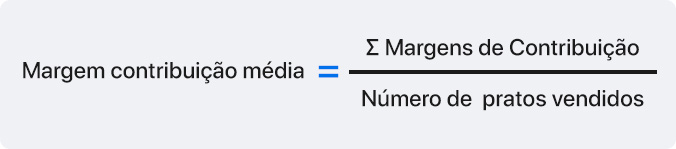
Then calculate the average contribution margin line. Separate the items into groups (for example: appetizer, main course, desserts). Then add up the contribution margin values of the items in the group and divide by the number of items sold in the group.
Step 4 – Calculating popularity
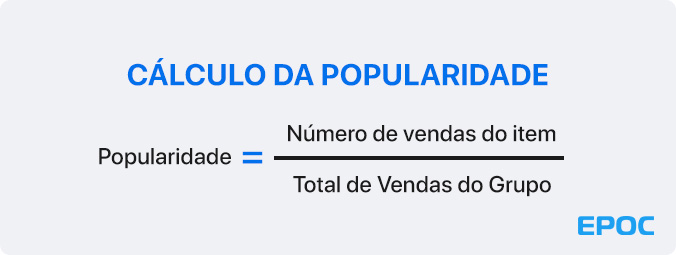
Popularity is a percentage relative to the group's total sales. To calculate it, use the formula:
Next, calculate the average popularity line, also considering the groups. Divide 100% (representing the total items sold) by the total number of items in the group. Apply a 70% safety margin to the resulting value, to account for variation in consumption.
The formula is as follows:
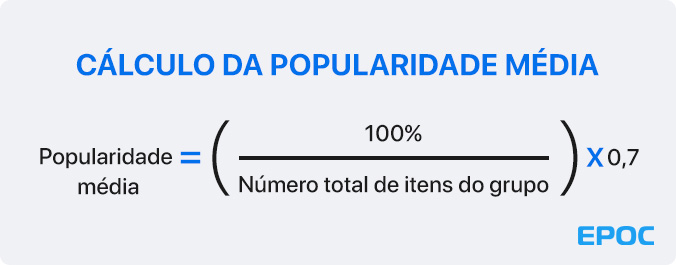
Popularity is considered high when it's greater than 70% of the average popularity. For example: if the average popularity is 14%, items with popularity greater than 9.8% (70% of 14%) should be considered high popularity. Those with popularity below 9.8% should be considered low popularity.
Step 5 – Analysis in the matrix
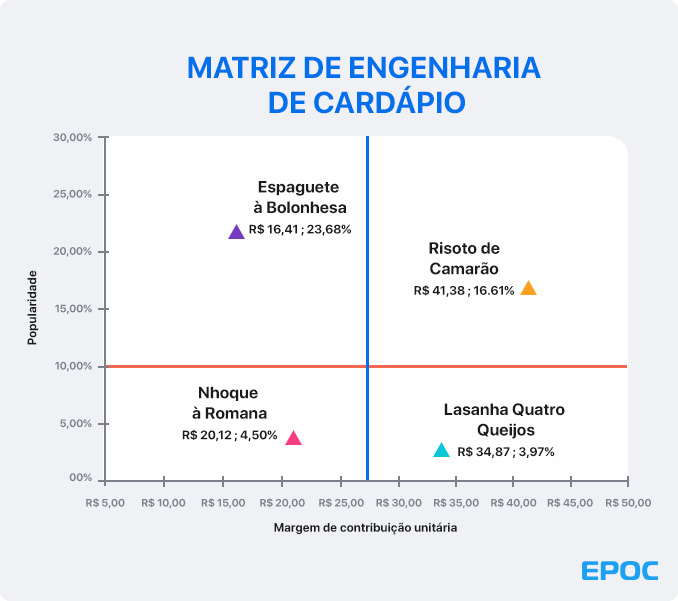
Once you know the profitability and contribution margin of each item, as well as the average line per group, place the items in the matrix to see which classification they fit into.
Here's an example:
Step 6 – Mapping the prime areas of the menu
To start, remember that a menu, like a newspaper or magazine page, has some “prime” spaces — exactly the ones our eyes are naturally drawn to while reading. They are:
- Top
- Top right corner
- Bottom
It's in these strategic spots that you should place the items you most want to sell and the ones that bring in the most profit.
Step 7 – Rearranging the items and optimizing the menu
Based on the classification of the items, you can build menu engineering that delivers results.
First, remember to put the Star and Puzzle items at the top, to draw more attention to what's profitable. The Plow-horse items can go at the bottom, and the remaining space can be taken up by the Dog items.
Other simple tips that optimize your bar or restaurant menu are:
- Use professional, high-quality photos of products actually made at your establishment;
- Don't use the currency symbol ($) in the price, just the figures;
- Write complete, accurate descriptions of each item;
- Use the colors, logos and fonts of your establishment's visual identity.
Step 8 – Keep refining over time
All set, now you just wait for the results, right? Well, not exactly.
Always keep an eye on the performance of your menu items and run tests, move items around and find out whether it's working – the number of sales is a good metric for that.
Also, make adjustments to include relevant items and promotions on seasonal dates.
Discover EPOC and take your results higher
Menu engineering is an effective method for increasing your restaurant or bar's sales and profitability. By doing an in-depth analysis of your menu items and adopting the right strategies, you can boost your business.
That said, it's not always easy to collect data, run analyses and still have time to develop strategies and track the results. That's why a great ally is a restaurant and bar management system like EPOC.
With a POS integrated into a complete back office, a digital menu accessible via QR Code, electronic tabs, self-service solutions and an Analytics Dashboard with all your operation's data, you optimize the operation and simplify management.
Want to know how we can help your business grow? Then talk to our specialists.