Samba Circles Are a Bar Strategy
The format extends how long guests stay, strengthens venues' identity, and requires long-term planning to deliver results
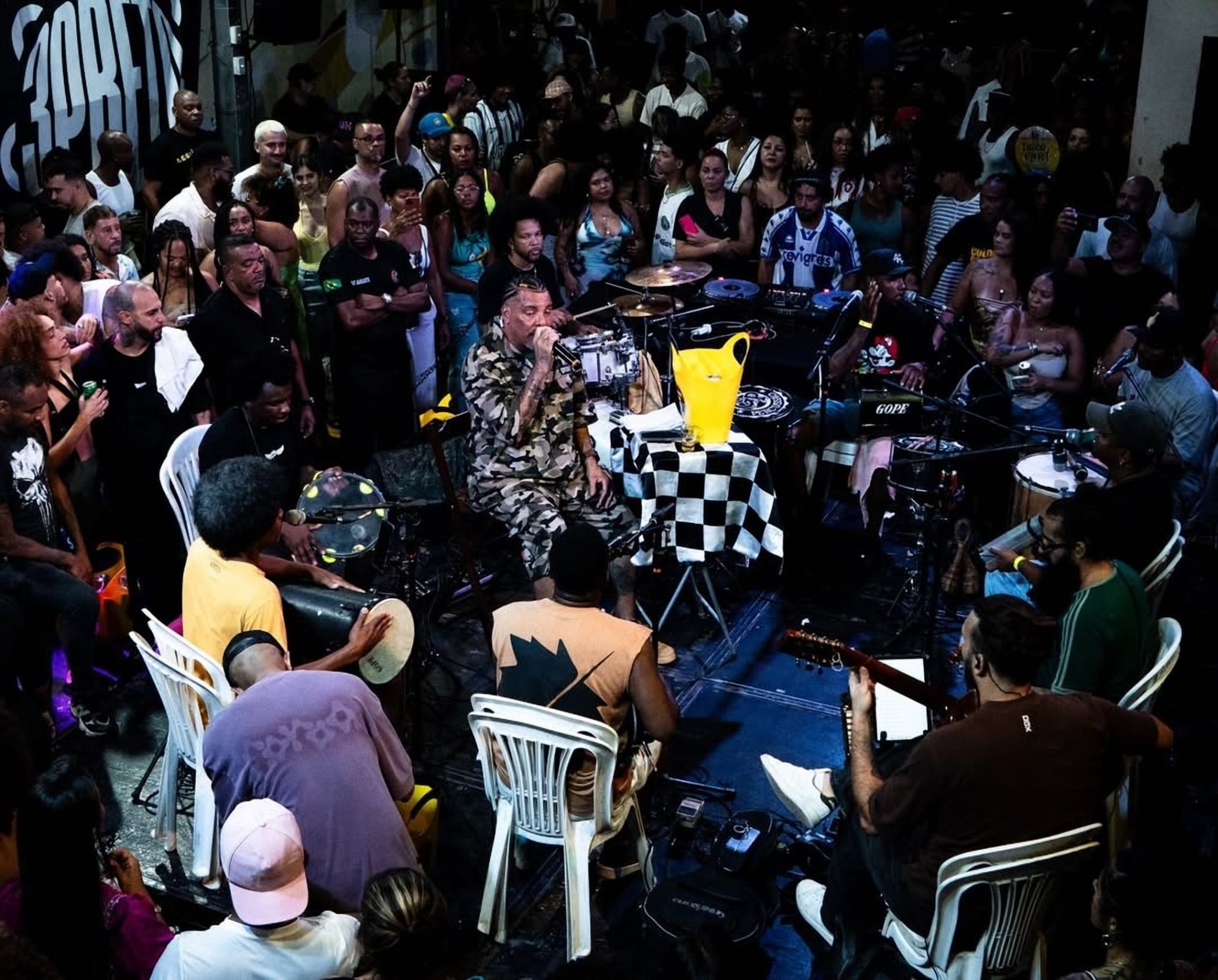
With the official start of Carnival approaching, the presence of samba circles in bars across the country is becoming even more prominent. The format, which speaks directly to Brazilian culture and to the desire for shared experiences, has gone from being just a one-off attraction to establishing itself as a strategy for positioning, filling time slots, and building a relationship with the audience.
More than just following the Carnival calendar, bares that bet on samba circles throughout the year seek to extend how long customers stay and create a recognizable identity. The musical experience comes to serve as a central element of the business concept, influencing everything from the audience profile to operational and consumption decisions.
For Pedro Costa, owner of Saruê in Belo Horizonte, the format's strength lies in its ability to create a bond. “The samba circle creates a different bond with the audience and encourages them to stay. The idea is to bring the customer in earlier, because the circle starts after lunch, and to make that time pay off more. That's the main goal, and the samba circle helps a lot with that”, he says.
At the same time, the owner warns that the choice isn't neutral. “There's a portion of the audience that doesn't like live music and may stop coming once they realize the bar has become only that. On the other hand, those who do like it become more demanding. When there's no music, they get frustrated and look for another place”, he says. For him, betting on samba means taking on a long-term project. “There's no point putting on a samba act on Sunday and expecting it to work. It needs time to mature. Once you establish it, you realize you've married samba. Cutting it later has a big impact on revenue.”
Samba circles and spending: longer stays, different logic

Although samba circles increase how long people stay, that doesn't necessarily mean a higher average ticket. According to Pedro Costa, it's a volume strategy. “People stay longer, but the average ticket doesn't necessarily go up. It's a mass strategy, about getting more people into the venue, because what interests them at that moment isn't just food and drink, it's the show”, he explains.
This behavior calls for adjustments. “Sometimes the glass is empty, but the music starts and the person takes a while to get up and buy another. That's why strategies like beer buckets and combos help, because the customer keeps ordering without having to leave their spot”, he says. At venues where the audience stands, getting to the counter becomes even more complicated.
The layout of the space also plays a role. “Samba is very much a standing thing. People want to dance, see the artist up close, feel the circle. Places where everyone sits down don't attract samba lovers as much”, he assesses. Hybrid spaces, which allow both sitting and moving around, tend to work better, and they also allow for a bigger crowd. “Since a band is expensive, it's in the bar's interest to fit in as many people as possible. Limiting seating too much can make the math impossible.”
The audience's relationship with samba circles also involves loyalty to the artist. “The customer comes back, but isn't always loyal to the venue. Often they follow the act. That has to be part of the equation”, says Pedro. In this scenario, the bar competes for attention not only with other venues, but with the city's cultural calendar.
Carnival amplifies, but doesn't solve
With Carnival approaching, samba circles gain even more visibility. However, Pedro Costa sees risks in starting this kind of programming just to take advantage of the season. “Consumers prefer places that already play samba, that have a predictable experience, infrastructure, and well-known artists. Starting at Carnival requires a lot of investment in communication and involves high risk”, he assesses.
According to him, the first events usually work as an investment. “The first one loses money, the next one breaks even, then you start fine-tuning. Getting to Carnival without that prior learning is risky.” For those already working with samba, the season can open up specific opportunities. “Programming a samba act near where the blocos disperse makes sense. You're not competing with the bloco, you're complementing it.”
In Rio de Janeiro, Baródromo, in the area around Maracanã, shows how samba circles can connect with Carnival culture on an ongoing basis. The bar began offering free samba no pé classes on Sundays, integrated into the venue's music programming, bringing the audience closer to the dance, to samba-enredo, and to the memory of Carnival in Rio. With a themed collection and regular programming, the space reinforces the cultural experience and boosts engagement from regulars, especially on weekends.
For Pedro Costa, samba doesn't depend on Carnival. “Samba is perennial. You can have a full house all year long. Carnival helps in some cases, but it doesn't make that much of a difference.” Even so, he notes that there's an audience looking for alternatives to the street. “Some people want a more structured place, but that demand isn't that big. A lot of people travel during Carnival.”
With planning, a clear identity, and an understanding of the audience, the samba circle establishes itself as a relevant strategy for bars across the country. More than a seasonal attraction, it stands as a tool for positioning, community, and value creation throughout the year.