Order placed directly from the POS
What the dining room enters reaches the kitchen without printing or re-entry.
Platform · Operations layer
The kitchen in the same flow as the dining room, with no paper in between.
Between the dining room and the kitchen there's usually a gap: the order is entered on the POS, printed, and someone in the kitchen reads it and organizes it. Each of these steps is where the tab goes missing, the sequence gets lost, and the dish comes out at the wrong time — and it happens most during peak hours.
A paper tab leaves no trace: there's no way to measure production time, or know why a dish was delayed. Course pacing becomes a decision left to the cook's memory, and the customer experience is at the mercy of how busy the day happens to be.

Layer 01
It sits in the operation layer, alongside the POS: the order originates at the point of sale and is dispatched to production without passing through a file or re-typing, and the time of each stage feeds up into the data.
What the dining room enters reaches the kitchen without printing or re-entry.
Starter, main course, and dessert go out in the right order, coordinated by the dining room.
Each station sees only what's theirs — grill, salad, dessert — instead of the whole tab.
How long each order took at each station, to size the team and find the bottleneck.
The completed step is marked on the screen, and the dining room knows the dish is ready.
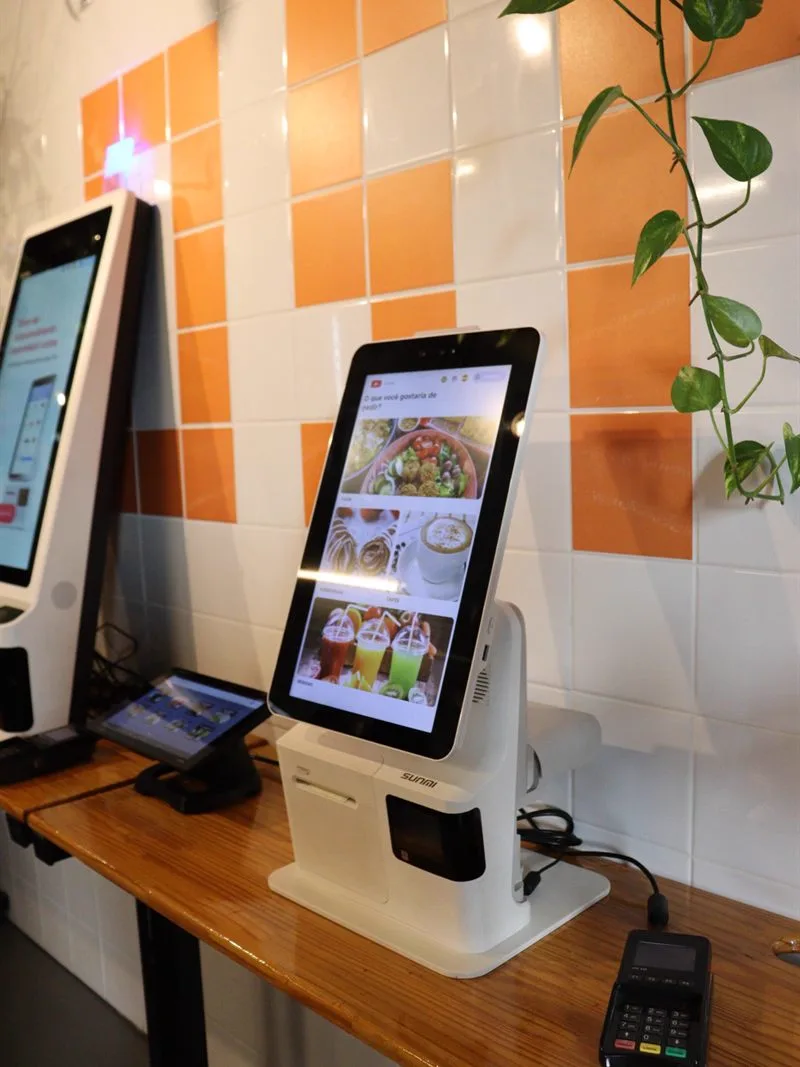
Orders from the kiosk and the digital menu enter the same production queue as the dining room.
It runs on the venue's local network, so it keeps working between the POS and the kitchen even without internet — the same continuity described on the offline operation page.
Yes. Each production station can have its own screen, showing only what belongs to that station, and the full order stays visible at expediting.
They do, in the same queue as the dining room. What comes from self-service and delivery reaches the kitchen like any other order, without a second operation.
Talk to a specialist
How many locations, what stack is already running, what needs to be integrated, and what the rollout would look like.