
Documented REST contract
The same interface the platform uses internally, published and versioned.
Technology
It integrates with the ecosystem the chain already uses, including where SAP or TOTVS are already running.
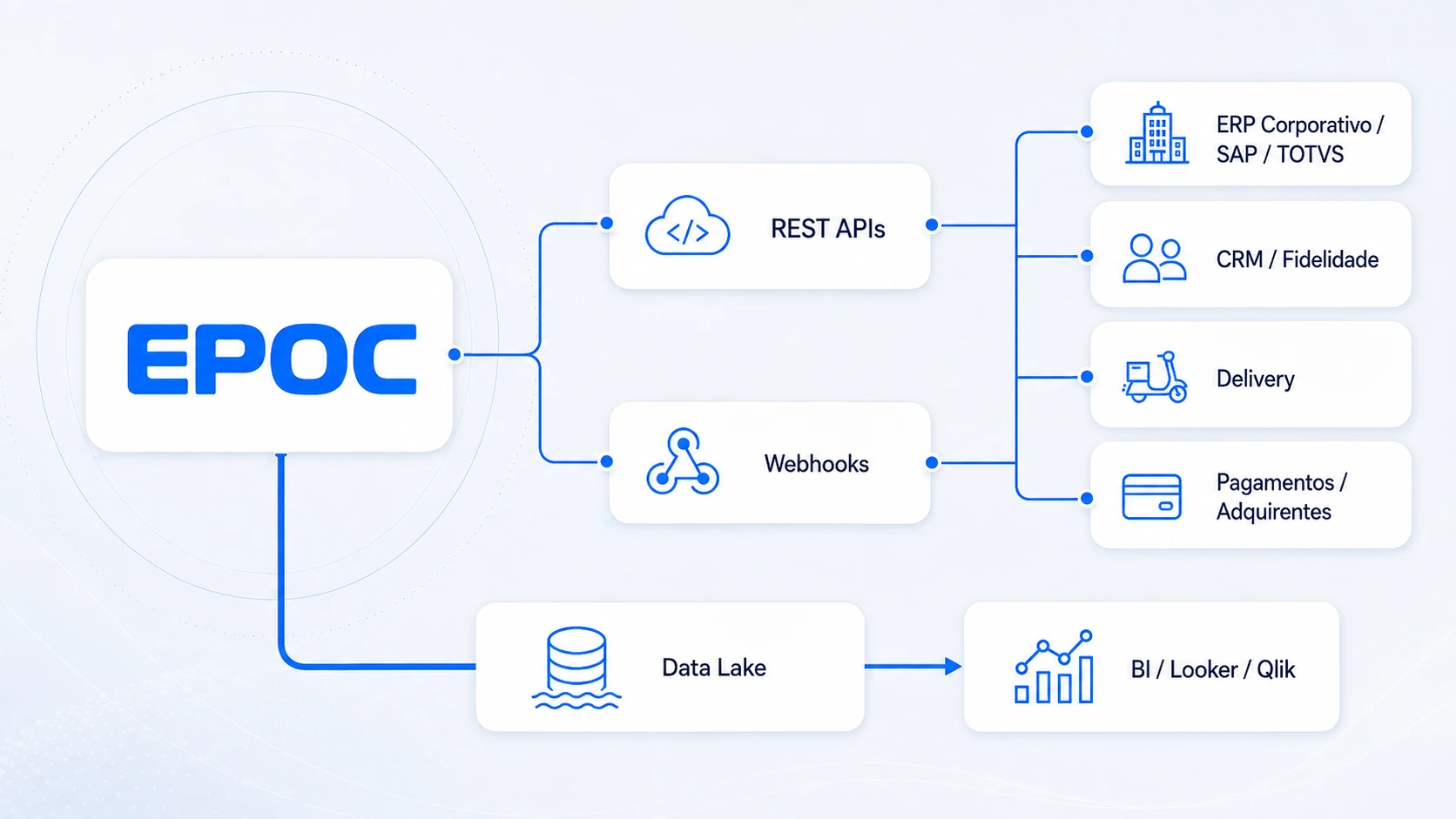
A chain with a corporate structure already has ERP, BI, and CRM selected, often with years of investment and process built on top. When the operating system demands to be the center of everything, the conversation stops being about the operation and becomes about replacing what already works.
That stalls the decision. The technology director weighs the risk of replacing a piece that talks to everything else; finance adds up the cost of what would be discarded; and the project that would have fixed the operation halts because it turned into a stack-replacement project. File-export integration, when it exists, fixes the report and not the process.
Layer 03
Together with the Data Lake, this is where the platform stops being a closed system and becomes part of the customer's corporate structure.
The same interface the platform uses internally, published and versioned.
Sales, products, and payments come into the platform through the API — it doesn't only push data out.
The client's system is notified when something happens, instead of having to keep polling.
Integration tested before it touches live operations.
SAP and TOTVS are among the ecosystems already supported.
Data available to the tool the client already uses, including Qlik.
8 certified acquirers and 1 sub-acquirer.
No. The architecture exists for exactly the opposite reason: the platform integrates with what the chain already uses. SAP and TOTVS are among the ecosystems already supported.
The API's technical documentation is provided during the integration and certification process. A public developer portal is in preparation.
The integration is built and tested against a separate environment, with test data, before anything touches the production operation.
Yes. The Data Lake exists so that the chain's operational data is available for analysis, cross-referencing, and export by the customer, rather than locked into the platform.
Talk to a specialist
How many locations, what stack is already running, what needs to be integrated, and what the rollout would look like.