
Centrally distributed menu
Defined once, applied to POS, kiosk, delivery, and table without a parallel copy.
Platform · Management layer
Change it at the center, and it reaches the entire chain — without rolling it out location by location.
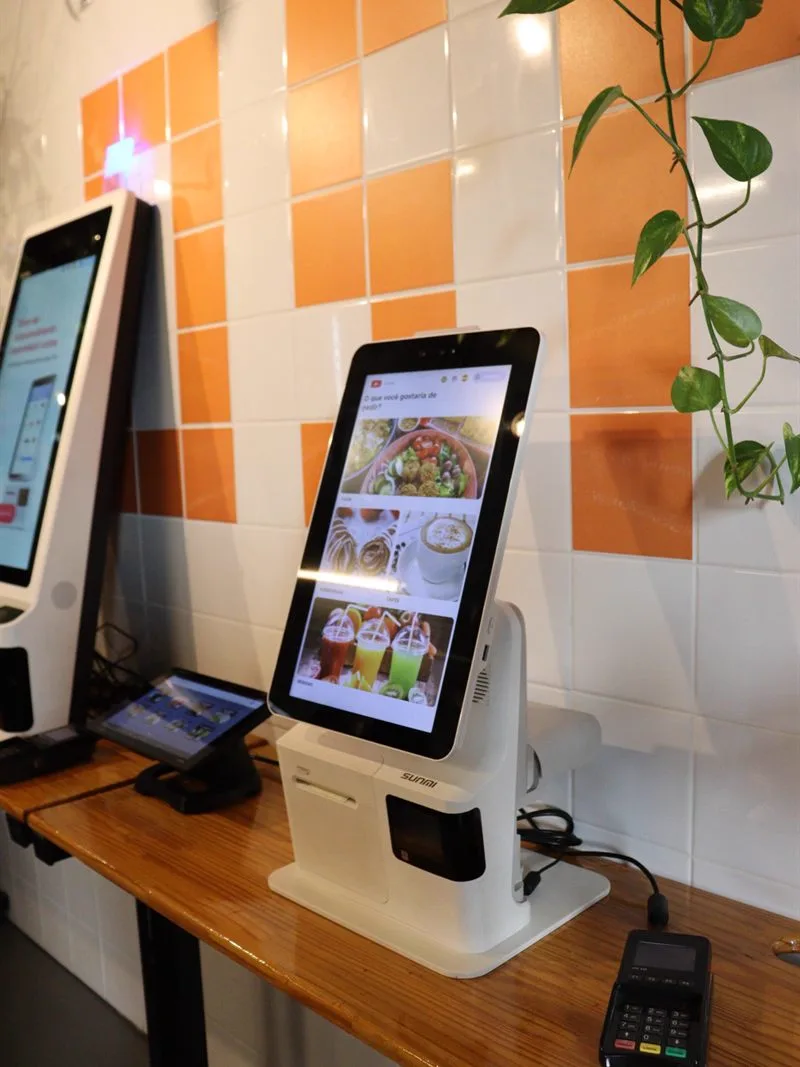
In a chain, the menu lives in many places at once: the POS, the kiosk, delivery, the table. When each channel and each store keeps its own copy, changing a price becomes a manual hunt — and that's where the promotion goes wrong and the price diverges between the screen and the counter.
Inconsistent pricing is friction with the customer and a hole in the margin. The campaign that should start on Saturday starts at the store that remembered to apply it. And the team's time disappears keeping menus in parallel, in work that shouldn't have to exist.

Layer 02
It's the management layer distributing to the operation: menu and price go out from the center to POS, kiosk, KDS, and delivery, and what was sold flows back into the data.
Defined once, applied to POS, kiosk, delivery, and table without a parallel copy.
Counter, delivery, and table can each carry different prices for the same product.
The chain adjusts price by region when it makes sense, within governance.
The change and the campaign go live on the scheduled date, across the entire chain at the same time.
What each location can change on the menu is defined by permission, not by exception.
Add-ons, combos, and notes standardized, so the order comes out the same on any channel.
It arrives as soon as it's published, or on the scheduled date. The location doesn't need to apply anything — the standard comes down from the center.
Yes. Price can vary by location or market within the chain's governance, with what each level can change defined by permission.
The product is unique; price and availability can vary by channel. It's one menu, with rules by channel — not several menus to maintain.
Talk to a specialist
How many locations, what stack is already running, what needs to be integrated, and what the rollout would look like.