
Commercial Automation: Impact on Your Business
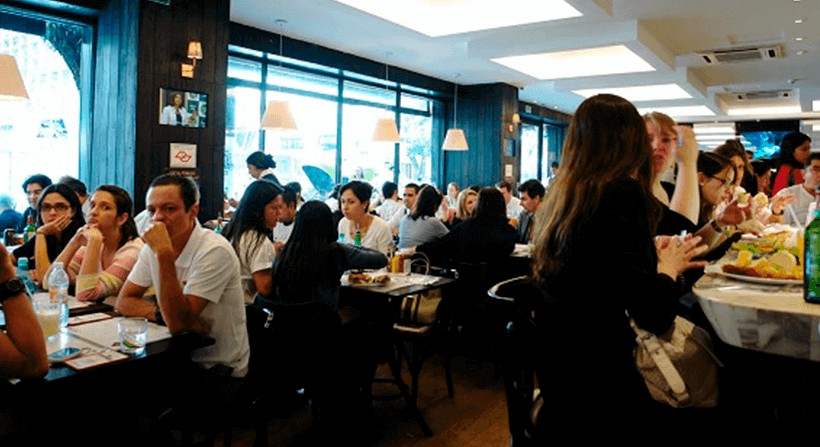
“We can't waste time” is one of the most-heard phrases in high-volume settings like restaurants at noon, bars during happy hour and every variation in between. Between the constant flow of customers coming and going asking to be served and the arrival of the drink or food they wanted, there are (supposedly) organized processes that should be followed to the letter to ensure the business runs smoothly.
Every second counts when it comes to preparing dishes and drinks, serving customers and managing the products in inventory, on top of financial management. In short, the need to establish and follow processes is of the utmost importance for the business, defining step by step what to do from the moment the customer arrives until the moment they pay the bill.
For the customer to leave satisfied (and come back!), staff training must follow exactly the way the restaurant's or bar's processes were organized.
The use of paper tabs to write down orders dates back to before the storming of the Bastille (1789), and they are known for how easy they are to operate – all you need is to know how to read and write. Orders were taken by the waiters and then carried to the kitchen or bar, where whoever was responsible for creating the item handled the preparation, then calling the waiter to take it to the customer in question. There are so many flaws and chances for error in this process that a single post wouldn't be enough to cover them all: illegible handwriting alone would be enough to bring the whole thing down!
Commercial automation: what are the advantages for your business
With commercial automation, in which paper tabs are replaced by more recent technologies – such as an integrated program -, the process improves in the following areas:
- Custo operacional – cutting the time the waiter takes to carry the order to the kitchen can mean more customers served by the same waiter
- Communication between areas – orders are displayed on screens in the kitchen, or on a production printer, so cooks can easily read what was ordered, with notes about adding or removing ingredients
- And customer satisfaction – there's nothing more satisfying than getting your dish with every requested change, and fast!
Why is commercial automation more efficient?
The production line was first conceived by Henry Ford, the founder of the car brand that bears his name. Aiming to cut costs by categorizing the process of the individual parts that made up the assembly of the first automobile, Ford managed to democratize access to the car at a competitive price. To illustrate, picture an anthill going about its business.
Each ant works individually according to its role in the colony, divided into the categories “scouts” and “gatherers”. The scouts' job is to find the food caches, leaving a chemical trail so the gatherers can find them in greater numbers to collect and carry the supplies.
By defining the role each one plays in the process of discovery and collection, they manage to avoid wasting the energy of the larger ones, as well as the supplies needed to feed them. Seen this way, the efficiency with which they prepare for winter is unmatched, doing away with excess in favor of efficiency, and is studied by several universities e renowned institutions.
That's exactly the case with commercial automation: clearly defining everyone's roles and integrating them by establishing an automated flow of information, so as to avoid unnecessary spending without losing service quality!
Main features of commercial automation systems
After the stress of the operational peak, the administrative, accounting and financial tasks are still waiting.
All the tallying of the ingredients used that day and how many are still in inventory, plus organizing into spreadsheets what was paid and by which payment method, so you can work out the fees debited from the total and know the real revenue for the day. Out of breath just reading that sentence? Well then, doing this manually, after a busy day, not only creates room for errors, it also turns taking care of your business into something tiring and stressful.
For entrepreneurs who opened a business to have more time with their family, this situation raises the very barrier that makes many give up on starting their own venture. Commercial automation, on the other hand, depending on the software you choose, makes life easier for said entrepreneurs — a lot easier! These are the steps of commercial automation that help you scale that wall:
- System integrating orders with inventory – each order will deduct from inventory the amount of that ingredient needed to prepare the requested dish or drink, speeding up closing time at the venue.
- Accounts receivable and payable – the option to associate the payment method (whether Visa, Mastercard, cash payments, among others) through the software will have the fees debited automatically, providing an analysis of the costs and profits that day brought in, as well as a cash flow forecast, since now you'll know exactly the amount and date of receipt from each of the card brands.
- Recording errors – manually tallying bills and payment methods can create confusion, since the methods aren't always recorded properly, allowing bank fees to eat into profits that should be yours. Not only that, there's the possibility of misappropriation by your own staff, easily hidden if there's no automatic record of money coming in and going out. Depending on the automation system installed, the administrator can view the payment changes made in the system according to the employee's login, identifying the moment it was done, as well as how recurrent that change really is for said employee(s).
- Knowing your customer – once all the financial and accounting requirements involved in running a business are taken care of, there's still the matter of understanding customers' consumption habits. Analyzing and defining strategies for this area is only possible by organizing and laying out in a spreadsheet the items commonly consumed at the venue. Read: spending hours going through receipts, typing in one by one the items consumed while waging a relentless battle against drowsiness and exhaustion.
In other words, in short, automating your business, whether it's a bar, restaurant or nightclub, helps with the small mistakes that we, as humans, tend to make.
Automation makes your operation more efficient, profitable and organized. Not only that, it can tell you exactly how many orders and customers each employee served, letting you know who the most efficient and productive people on the team are – and who needs a talking-to! That way, optimizing your business becomes clear, highlighting the areas – and the employees – that need to improve their performance.
In addition to all these conveniences, the EPOC commercial automation system brings, in its new update, a range of features that provide you with the tools you need to stand out in the marketplace.
Among them we have the option of self-service and tab payment at kiosks, clearing the line at the register; the option of pour control for bottles purchased by customers; inclusion of the customer's address on bill checks and printing of the delivery route in the delivery module; splitting the bill across multiple CPFs at payment time; among many others!
With more than 10 years in the market and excellence in serving its customers, the company has acquired the know-how (knowledge) needed to optimize the operation of businesses as varied and specific as small shops, bars, restaurants and nightclubs, adapting to the needs of the business in question.
Interested in the technology? Want to know how to install an automation system in your business? Fill out this form and our team will get in touch with you!