
Catering: How to Offer the Service and Increase Profits
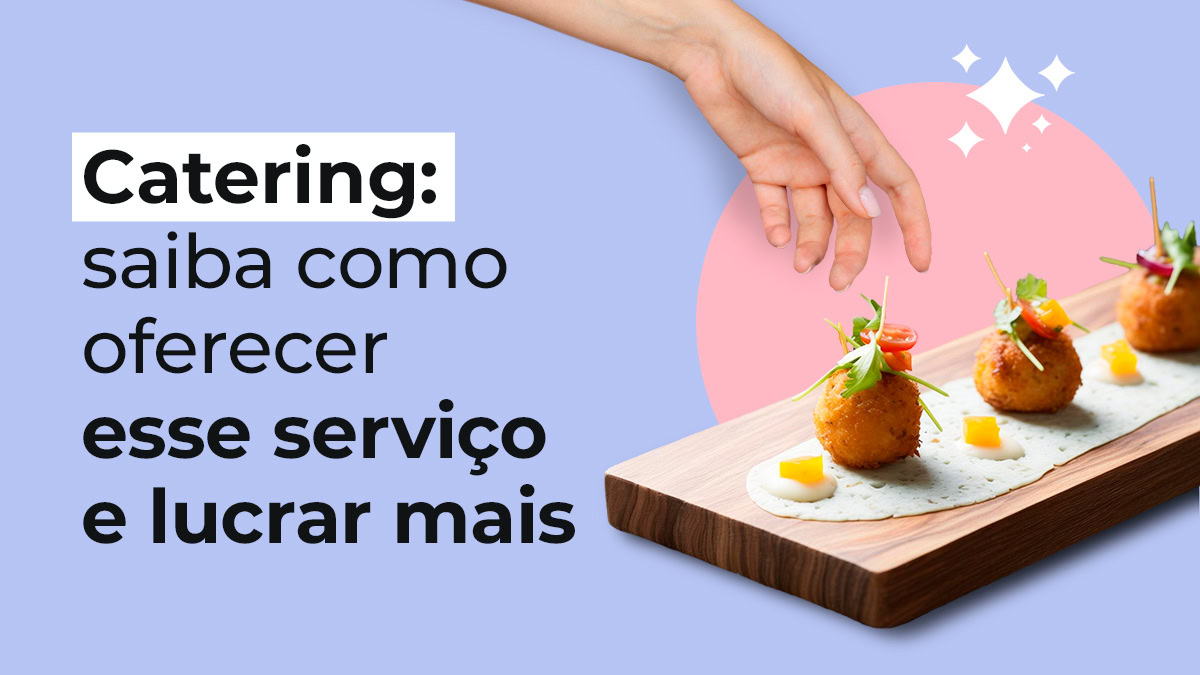
Catering is an excellent opportunity for restaurants to diversify their revenue streams and boost brand visibility.
If you're thinking about offering this service, keep reading this article. In it, you'll learn what catering is, its advantages, and tips for success. Let's dive in!
What is catering?
Catering means "to supply" or "provide for" in English. As the name suggests, it's a service that supplies food and drinks at the location requested by the client — such as weddings, corporate parties, conferences, and more.
Unlike a traditional buffet service, where guests serve themselves and build their own plate however they like, catering also offers other formats, such as coffee breaks, à la carte dishes, or finger food.
A full catering service generally includes:
- Menu planning;
- Preparing food and drinks;
- Delivery and on-site setup logistics;
- Equipment and serving utensils;
- Waitstaff service;
- Cleanup.
In other words, the catering provider is responsible for everything related to food service on-site. Thanks to this convenience, market demand is high, and it's possible to serve many different audiences. Learn more below!
Leia também: How to increase your restaurant's profit margin
What are the types of catering?
The catering market is promising because the service can be offered in many different contexts. Learn more about the main types below:
Corporate
Corporate catering provides meals for companies during meetings, events, training sessions, and conferences.
The service needs to fit the professional setting, offering practicality and efficiency. Coffee breaks, executive lunches, full meals, and snacks to be consumed throughout the day are some options that meet this demand.
Social
Social catering serves events such as weddings, birthdays, and private parties. In these cases, meals can be served in various formats: buffets, themed stations, cocktail receptions, finger food, à la carte, and more.
In-Home
In-home catering prepares meals to be enjoyed at the client's home, whether for a family event or as part of everyday life.
Special meals, barbecues, meal kits, and boxed meals are some examples of what can be offered. For this audience, the idea is to bring convenience to the daily routine and make family events easier to host.
Industrial
Industrial catering supplies meals for factories, hospitals, schools, and other locations where demand is very high and recurring. In other words, it serves food in large quantities.
This type of catering has its own particularities and depends on the needs of each setting. In factories, for example, meals may be served in cafeterias across multiple shifts. It's also common to provide pre-packaged snacks, meal boxes, and more.
These are just the main types of catering. The market has high demand and varied needs. That's why catering companies can either specialize in one specific service or offer several different models.
Also check out: 5 tips to boost your restaurant's revenue
Why offer catering at your restaurant?
Although it's a complex service, catering is a natural path for many restaurants and comes with several advantages, such as:
Revenue diversification
Offering catering is a way to diversify your restaurant's revenue streams.
Once you've built a loyal, recurring client base, it can also be a way to secure steady revenue and balance the books, especially during slow periods.
Optimized use of resources
Catering can help you use your kitchen capacity and your team's expertise more efficiently, making the most of the resources you already have.
Restaurants that only open for dinner, for example, can use their space during other hours to produce catering meals.
Brand expansion
Serving off-site events helps increase brand visibility, creating an opportunity for the restaurant to stand out and attract new customers.
Likewise, if the restaurant already has a well-known brand in the market, it can win over catering clients more easily and strengthen its market presence.
How to offer catering services?
Good planning, effective communication, and a quality service are some of the essential points for succeeding in catering. Check out some tips below!
Define your niche and target audience
As we've seen, there are various types of catering. The ideal approach is to choose a niche and target audience that align with your restaurant's concept, especially in the beginning. That way, you can offer a quality service that's also profitable for your business.
Once you've gained experience, you can expand your services into other niches and serve a more diverse audience.
Make a detailed plan
Since catering is a full-service offering — and often a complex one — good planning is essential, covering every aspect from menu design to cleanup.
Identify the resources you'll need (staff, equipment, utensils, supplies) and the processes that need to be carried out (dish preparation, delivery and setup logistics, waitstaff service).
This ensures the quality of the delivery and also lets you forecast the costs involved, helping you avoid surprises.
Create a flexible menu
Create a menu that's flexible and can be easily adapted to your customers' needs and preferences. Each occasion is unique, so having different menu options is important to accommodate everyone.
Also consider including options for different service formats (finger food, à la carte, buffet, etc.), since that lets you reach a wider audience.
Build a qualified team
Choose qualified, well-trained professionals for your catering service. This is very important for maintaining a consistent standard of quality, not just for the food, but for the service as a whole.
After all, setup, organization, cleanliness, and service are factors that shape how customers perceive you, and just as with your restaurant, this is key to building loyalty.
Offer competitive prices
The catering segment is highly competitive, and beyond food quality, customers are also looking for good prices. Restaurants have the advantage of already having the structure, equipment, and staff to provide the service.
Even so, you need to control your costs, negotiate with suppliers, and streamline processes to offer a competitive price while still maintaining a good profit margin.
Check out more tips for boosting profits at your restaurant
With careful planning, a well-trained team, and a commitment to quality, restaurant managers can turn catering into a successful business and increase their profits.
Putting these practices into place will guarantee not only customer satisfaction, but also the long-term growth and sustainability of the business.
To check out more tips on restaurant management, keep following the EPOC blog e check out our free resources.