Consumer Protection Code: 4 Real-Life Stories
The legal framework that protects the public from abuses committed by small, medium, and large businesses gained widespread attention both through the rollout of the Consumer Protection Code and through high-profile cases.
In March 1991, Law No. 8.078/90 went into effect — legislation responsible for regulating consumer relations and protecting buyers or contracting parties from possible errors or violations by companies. However, even with these relations now regulated, clashes still happen on both sides of the coin — whether through consumers abusing their right to complain, or through the punitive nature of the measures companies adopt when they run into problems.
According to Dr. Marco Mello Cunha, of Tess Advogados in São Paulo, "the problem lies in how routine the punitive approach has become when setting the amount for pain-and-suffering damages in cases like, for example, wrongly listing consumers in default databases (SERASA and SPC)."
In other words, the fallout suffered by the consumer who gets listed with SERASA or SPC by companies ends up being far greater than the compensation those companies pay out when the matter goes to court. Fines in these cases tend to fall somewhere between R$5,000 and R$15,000, an amount that's far too small when weighed against the corporation's monthly profits.
For the consumer, though, the delay and complexity of getting their name removed from these default databases often involves everything from having checkbook delivery suspended to having credit lines cancelled, as well as difficulties renting property and taking out insurance.
Legal clashes between these two spheres — public and corporate — range from administrative failures to wrongful charges, including thefts and robberies suffered inside the establishment or in adjacent services.
According to Alexandre Dalla Bernardina, a Civil Law professor at FDV, the biggest obstacle to consumers fully exercising their rights "is an overloaded judiciary. That overload comes from a lack of structure, with cases piling up, all the way through to delays in processing," which leads many consumers to give up on the process altogether given the average time it takes to resolve an issue. Next, we'll look at some recurring cases and how they were resolved.
Leia também: Consumer Rights: The Other Side of the Coin
“WHERE'S MY LAPTOP?!”
According to Article 14 of the Consumer Protection Code, service providers are liable “for repairing damages caused to consumers by defects related to the services provided.”
In this case, the safety and integrity of both the vehicle and any items left inside it are considered the responsibility of the service provider, whether outsourced or directly hired by the business the consumer patronizes. The establishment that offered the service, or the (outsourced) company responsible for providing it, must take responsibility for the safety of both the vehicle itself and any items left inside it.
Based on this interpretation, the Rio Grande do Sul Court of Justice ordered Churrascaria Roveda LTDA, a traditional restaurant in the city of Garibaldi, to compensate a customer whose laptop and other belongings were stolen from inside his car. The key issue was that the restaurant advertised “ample parking for your convenience” as part of its value proposition to customers.
In this case, even though the restaurant didn't have an enclosed area designated for customers' cars, the judge handling the case found that the restaurant's messaging encouraged use of the space as an area adjacent to the business. As the ruling put it, “there is an element that inspires trust in restaurant patrons, which is enough to show that specific surveillance should have been in place on the defendant's part.”
On appeal, the restaurant was ordered to pay R$2,149.00 in material damages and R$3,000.00 in non-material (moral) damages. The double charge was due to the fact that the thief had broken into the client's car doors, forcing him to repair the damage to the vehicle as well as buy a new laptop.
Having a case like this hit the media ends up backfiring on the establishment for two reasons:
1 – future and current customers won't feel as comfortable leaving their vehicles in the area advertised as the establishment's parking lot, believing there's no security there, and
2 – to fix the problem, both in terms of trust and negative media coverage, the restaurant will have to invest in a campaign that restores customers' confidence, as well as invest in infrastructure to show that a real solution was put in place to provide greater security for customers. In these cases, it's not enough to simply say things have changed to win customers back — you also need to show that the way the service works has actually changed.
To read the full story, click here.
TURNED AWAY AT THE DOOR
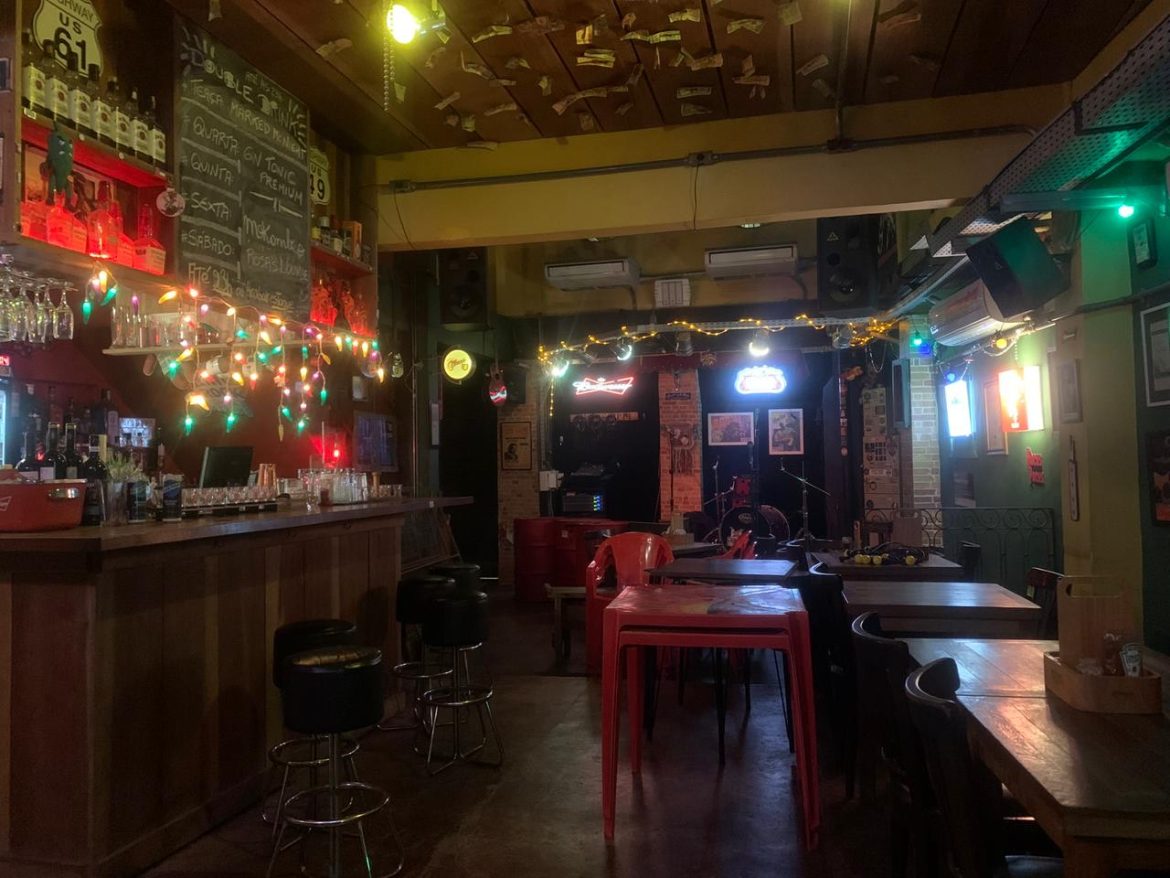
When the police get called, it's usually because the situation has spiraled out of the control of those involved. But what if one of the people involved was part of the uniformed staff? That's exactly what happened in Belo Horizonte, at Botequim São Firmino, a landmark of Minas Gerais nightlife.
The person involved had been invited to a friend's birthday party held at the venue mentioned above. Arriving in jeans and a T-shirt bearing the name of another nightclub, and despite knowing the bar had a “smart casual” dress code, he was turned away.
Even though staff tried to resolve the issue by offering the guest a bar-branded shirt so he could still attend the party, he refused, saying he didn't want it given the situation. Even as he lost his temper, apparently trying to pressure staff into bending the rules, nothing changed — and he wasn't compensated for anything, since nothing illegal had occurred.
It was proven that the establishment had a sign at the entrance warning about the rule “not allowing entry to people wearing tank tops, team jerseys, promotional T-shirts, shorts, or flip-flops”. The notice was enough for the judge to uphold the ruling in favor of the business in question, and the reaction from the staff and security guards involved was courteous enough that it didn't lead to any backlash on social media. The guest was the only one dressed in a way that didn't match the establishment's rules, even though he had reportedly visited the bar on “3 or 4” occasions, according to the accounts given.
Consumers often try to abuse their rights, seeking perks and exceptions that would benefit them. In these cases, stay calm and stand firm, following the house's pre-established rules. Avoid filming the scene with phones, and invest in security cameras instead, since being filmed tends to irritate the people involved. In the end, customers will commend you for how your team handled the situation, avoiding embarrassment or a sense of insecurity among the customers present by keeping the disturbance away from the rest of the venue.
To read more about what happened, click here.
A PRICEY APPETIZER
Sitting down at a table at a churrascaria is usually almost a signal for staff to bring out a flood of appetizers, small bites, and spreads, not to mention the bread.
Finding out these items were charged when the bill arrived used to leave a bad taste, especially since, until recently, waiters wouldn't even ask before bringing out these so-called snacks. Now imagine this: not only did you not order the “appetizer,” but you were brought a starter (in this case, a portion of chicken with catupiry cheese) you never asked for — and still had to pay for it, even though you didn't want to eat it.
This happened in Minas Gerais, at a churrascaria in Belo Horizonte. After the customer said he hadn't ordered the appetizer, the manager came to his table to try to resolve the issue. What followed was the exact opposite of a resolution: the police were called to sort out the situation, a sign of the manager's own inability to reach an agreement between the two parties.
The police officers, who already understood consumer rights (a thousand times better than the manager in question), suggested the customer only pay for what he had actually consumed. The owner of the establishment, upon learning what had happened, offered vouchers to try to smooth things over.
The problem had already blown up — having the customer escorted out of the establishment by police already constituted moral damages, especially since he was there with friends and an 8-year-old child. The vouchers didn't help at all, and the total amount the establishment ended up paying the customer reached R$4,000 (far more than the price of the appetizer, without a doubt).
The worst part for the establishment wasn't paying the fine, but losing a loyal customer and having the restaurant's name dragged through social media as abusive. What's more, whenever someone searches for the restaurant online, the story shows up on the first page of search results, causing potential customers, as well as loyal ones, to stop visiting the place.
To read more about what happened, click here.
“DUDE, WHERE'S MY CAR?”
In 1997, there was a case that could have set a precedent exempting restaurants from liability for items left in their care. In this case, the restaurant involved was La Tambouille, in São Paulo (SP).
The case involved the armed robbery of a customer's car in the establishment's parking lot, and since the Consumer Protection Code places liability for theft, damage, and robbery on the business (or the company responsible for the outsourced service), the bill, in theory, should have been footed by the restaurant.
However, the lawsuit over splitting the costs was brought by the car's insurer, in this case Porto Seguro. For that reason, the Superior Court of Justice (STJ) ruled that, since there was no consumer relationship between the insurer and the restaurant, and given that the robbery qualified as an unforeseeable event (force majeure), it could not have been prevented.
The problem with this ruling is that, had the lawsuit been brought by the consumer herself, the outcome would have meant exempting the establishment from liability for an act that, unfortunately, is common in the country we live in.
In other words, every time someone showed up armed in a business's parking lot, the business wouldn't need to compensate consumers harmed by the lack of security on the premises. This would undoubtedly set a precedent that would push investment in adjacent services down to the bare minimum needed to offer that service, with no need to invest in security or customer care. In that case, the consumer relationship would be built on insecurity, where even thefts and robberies inside the establishment itself could be classified as “force majeure.”
To read more about this case, click here.
Now that you know the legal fallout from these everyday situations, do you know how much it's going to hurt your wallet… or do you? The financial damage caused by negative messages spreading on social media is far worse than any compensation you'll ever have to pay.
With the rise and explosion of social media, there's no escaping public fallout, especially when any message is just 3 shares away from 1,500 other potential customers (and that's just within the person's closest social circle). Understanding what customers are entitled to, and the best way to approach them (regardless of who's right), is what's worth investing in today.
Want to learn more about what you can do to prevent these situations from happening at your establishment? Read the post: Establishment Rights: The Art of Avoiding Just Cause.