How to take photos of food dishes? 9 tips

Creating attractive photos of food dishes is essential to a restaurant's marketing.
After all, these images are used to grab customers' attention across several channels: the menu, delivery apps, social media, your website and your Google My Business profile. They also serve to convey the concept of the business and highlight what sets it apart.
If you want to know how to improve the photos of your restaurant's dishes, keep reading this article and check out our tips!
9 tips for taking photos of food dishes
Hiring a professional photographer who specializes in food is the best way to get the best photos of your dishes.
Unfortunately, not everyone can make that investment, so they have to manage on their own to create the photos. If that is your case, check out a few tips below for taking quality photos and getting better results in your restaurant's marketing!
Leia também: 5 food marketing tips to bring in more customers
1. Choose the right lighting
Lighting is the secret to taking quality photos.
It is best to take advantage of natural light, since that gets you better results. Artificial lighting can create shadows and distort colors, so it is better to avoid taking photos in dark spaces with different light sources.
So find a spot with the right lighting for your photos. A good idea is to set up a table near a window or even in an outdoor area.
2. Know your equipment
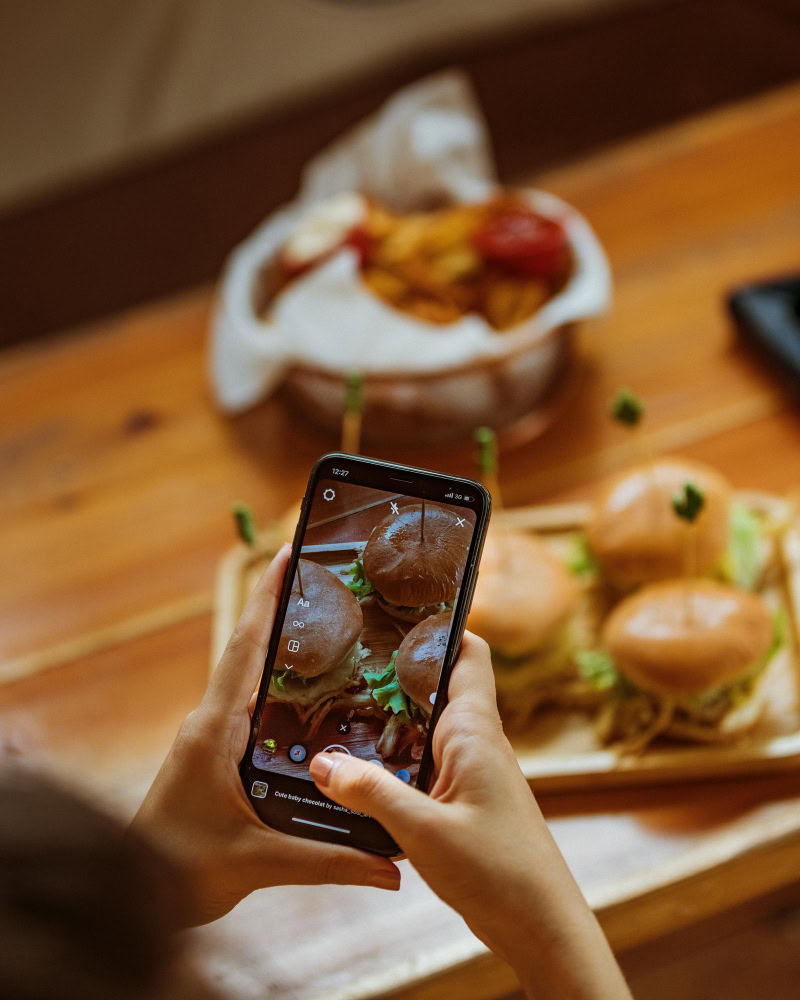
To take good photos of food dishes, it is also important to know your equipment. Whether you are using a smartphone or a professional camera, for example, get familiar with the available settings and features.
Most modern smartphones have advanced photography features that can produce high-quality images. So try different camera modes, get to know the possibilities, adjust the settings and run tests to build your confidence.
3. Pay attention to composition and arrangement
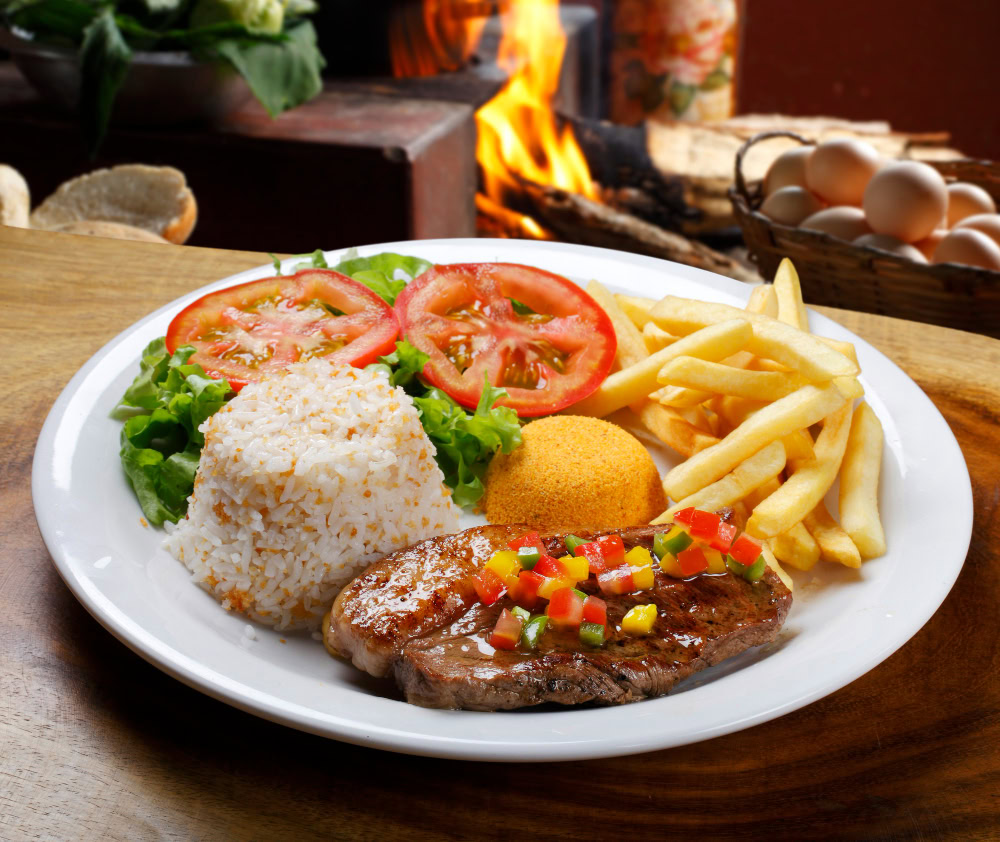
For a dish to look good in a photo, the composition of the elements has to be balanced. If you use more elaborate plating techniques in your restaurant, then your dishes probably already look appealing and you do not have to worry too much.
But either way, it is worth watching the details that make a difference in photography. Avoid including too many elements and different colors, since that can end up making the image confusing, with nothing standing out.
Go for a clean, organized presentation, in the best “less is more” style. A simple arrangement has a better chance of working than one packed with elements.
4. Watch out for backgrounds and surfaces
The backgrounds and surfaces used in food photos are very important elements and can interfere with how the dish comes across. So choose backgrounds that complement and enhance the colors and textures of the food, avoiding unnecessary distractions.
Natural surfaces, like wood or stone, are excellent options for creating a warm, authentic feel. Also try textured fabrics or wallpaper to add visual interest without competing with the main dish.
This way, you can convey your restaurant's concept, creating photos of dishes that match your type of cuisine or the style of your establishment.
5. Explore different angles
Trying different photography angles can reveal new perspectives and details of your dishes. Beyond the classic overhead shot, try capturing photos at an angle, close-ups and even unexpected perspectives.
Getting close to the dish and shooting up close can highlight details like textures and patterns, while a wider angle can capture the whole context of the restaurant's atmosphere.
Do not be afraid to get it wrong! Run some tests and then review the photos to pick the ones that turned out best.
6. Sweat the details
When photographing a dish, every detail matters. You are creating the images that represent your menu, and nothing can be out of place — or you may end up sending the wrong message and making a bad impression.
So sweat the details! Make sure everything is clean and organized before you shoot. Wipe the surfaces with a clean cloth to remove splashes, dust and stains. Check where every object sits.
And finally, highlight the details of your dish as well. Pay attention and identify that one element that makes the dish unique, such as a special sauce, something with an eye-catching color, a decorative herb. That will set it apart.
7. Use props in your photography
“Props” is short for the English word “properties”, which can be understood as “set pieces” or “accessories”. In food photography, it's common to use these objects to help tell a story and create a unique atmosphere around the dish.
Choose props that connect with your restaurant's identity and style, such as vintage kitchen utensils, cloth napkins or fresh plants.
Avoid overly flashy props that might pull attention away from the main dish. They should complement the food, not compete with it.
8. Edit in moderation
Although editing is an important step for improving your photos, it's important to use this tool in moderation.
Adjust brightness, contrast and saturation subtly to bring out the dish's strong points without compromising its natural look. Don't use over-the-top filters or effects that distort the color or texture of the food.
As we mentioned earlier, these photos represent your restaurant's dishes, and it's essential to be transparent and authentic so you don't leave customers disappointed.
9. Practice and experiment
Practice makes perfect! That's why our last tip is to shoot regularly, try new techniques and look for references to inspire you. Ask for feedback on your photos to find out what's working and what could be better.
That way, you'll always be developing your skills and taking better and better photos of your dishes!
Discover EPOC and boost your sales
By following the tips in this article, you'll be able to take quality photos to promote your restaurant and attract new customers. That's the first step toward increasing your sales and driving your business's growth.
For more restaurant management tips, keep following the EPOC blog. E se quiser saber como nossa plataforma pode ajudar seu restaurante a vender mais, fale com nossos consultores!