Self-Service for Restaurants: 7 Reasons
Self-service is a growing trend in restaurants. Consumers are increasingly open to using technologies that improve the experience, especially after all the adjustments brought on by the COVID-19 pandemic.
digital QR Code menu, Apps, electronic tabs, self-service kiosks and innovative payment methods are some of the solutions that have become part of venues' daily routine.
After experiencing all the benefits these technologies bring, customers have changed their consumption habits and now expect venues to offer these options.
If you're thinking about modernizing your business, discover the possibilities and understand all the advantages of restaurant self-service in this article!
What is self-service and how does it work?
Having a meal at a restaurant usually involves direct interaction with a waiter or counter staff. The customer arrives, asks for the menu, places the order, waits to be served, eats, asks for the bill, and pays.
However, with advancing technology and shifting consumer behavior, self-service has emerged as an alternative that's changing this dynamic.
As the name suggests, self-service in restaurants is when customers themselves take control of the service, meaning they don't have to wait for a waiter to bring the menu, take their order, or even process payment.
To make this happen, venues rely on solutions like QR code digital menus, tablets, or self-service kiosks, for example. This way, customers gain more independence and flexibility throughout the dining experience.
With numerous benefits for both venues and customers, restaurant self-service is a market trend. Check out the main types you can adopt below, see the advantages, and discover EPOC GO and KIOSK.
Types of self-service in restaurants and bars
There are several ways to adopt self-service in restaurants. While some venues offer a fully self-service experience, others use targeted solutions that improve operational efficiency.
Check out the main ways to add self-service to restaurants below!
digital QR Code menu
This is one of the most popular types of self-service. Restaurants place a QR code on the table so customers can access the digital menu without waiting for a waiter.
All it takes is using a smartphone camera to scan the code and get the link to view the menu. In just a few seconds, customers can browse the menu and find the items they want.
Learn more: 9 reasons to adopt a QR code menu
Tablets at the table
Another option is offering tablets at restaurant tables so customers can browse the menu and place their order.
This requires installing a system on these devices that can send orders directly to the printers or KDS system, so the waiter doesn't have to handle that task.
Self-Service Kiosk
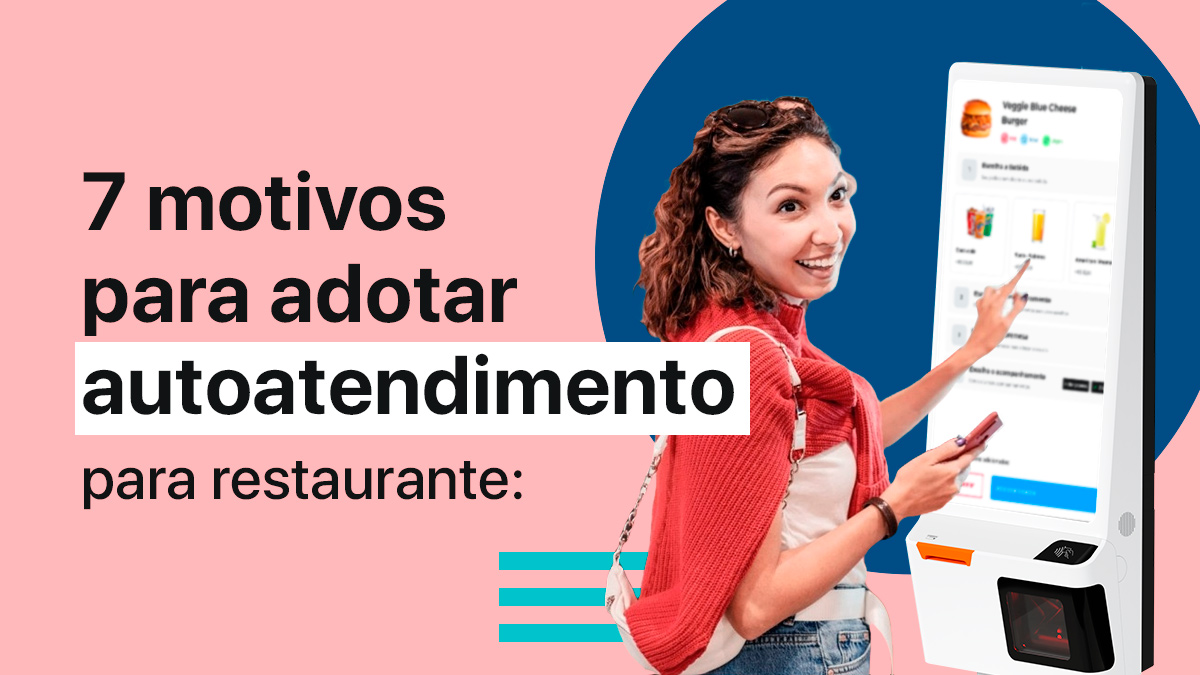
These totens de autoatendimento are a complete self-service solution. These machines are available for customers to access the menu, place their order, and pay — all without needing help from staff.
It's more commonly used by fast food restaurants, but it can also be a great option for venues that hand over finished orders at the counter, or bars serving draft beer, for example.
Leia também: 7 Reasons to Invest in Self-Service Kiosks for Your Venue
Apps
Apps are another way to make self-service possible for restaurants. Customers can install the app on their own smartphone to use self-service, or access it via the web through a QR code.
Each app has its own features: menu, ordering, payment, Loyalty program, among others.
Now that you know the main types of restaurant self-service, check out the advantages below, then discover the solutions EPOC offers!
7 advantages of restaurant self-service
Restaurants with self-service can offer customers a unique experience and get better sales results. Learn more about the main advantages of adopting this model below.
1 – More operational efficiency
Self-service makes restaurant operations more efficient, since processes are automated and order flow improves.
For example, the customer places the order at the kiosk, and it goes straight to production automatically, saving the waiter time and effort.
2 – Cost reduction
Restaurant self-service solutions also lead to lower operating costs.
The savings can come in several forms: it eliminates menu update costs and reduces the need to hire freelancers for service, and cuts down on losses and waste, among other things.
3 – Better order management
Restaurant self-service systems make order management easier, since they automate processes and are less prone to human error.
When the customer places the order directly in the system, errors are practically eliminated. Orders go straight to the KDS or production printers, making everything easier to organize.
4 – Faster service
One of the biggest benefits of self-service is speed. Customers don't have to wait for a waiter and have the freedom to place orders and pay whenever they want. This makes the whole service dynamic much faster and boosts customer satisfaction.
5 – Higher average ticket
Since ordering is easier and more convenient, customers tend to spend more. On top of that, interacting with more attractive digital menus — on smartphones, tablets, or kiosks — encourages more spending.
Finally, another factor that contributes to a Increase in average ticket is faster service: since orders arrive more quickly, customers feel encouraged to order more.
6 – Fewer order errors
When a waiter takes a customer's order, there's plenty of room for mistakes: forgetting to write something down, misunderstanding a request, illegible handwriting, mixing up one customer with another, and so on.
That all goes away when customers place their own orders through the self-service system. With no ordering errors, there are fewer returns and less waste — and happier customers.
7 – Outstanding service
Finally, self-service solutions make waiters' jobs easier, freeing them up to focus on more attentive, personalized service — offering suggestions to customers and making sure everything is just right.
The focus shifts away from repetitive, operational tasks and toward delivering the best possible experience for customers.
EPOC GO and KIOSK: the ideal solution for your business
EPOC offers a complete solution, built specifically for restaurants and bars looking to boost operational efficiency and increase profitability.
Our PDV agile and Administrative back office are integrated with other features that power your business, including self-service.
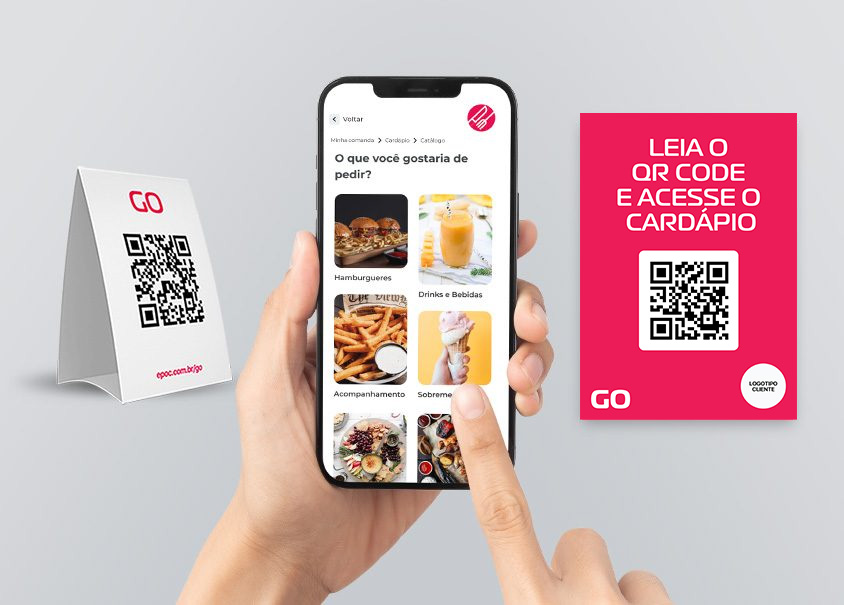
O EPOC GO is a digital menu accessible via QR code. But that's not all: besides viewing the menu on their own smartphone, customers can also place their order and pay.
Customers who use EPOC GO cut operating costs by 30% and reduce table turnover time by 15 minutes. And the ease of payment even boosts tips by 12% through automatic tip prompts.
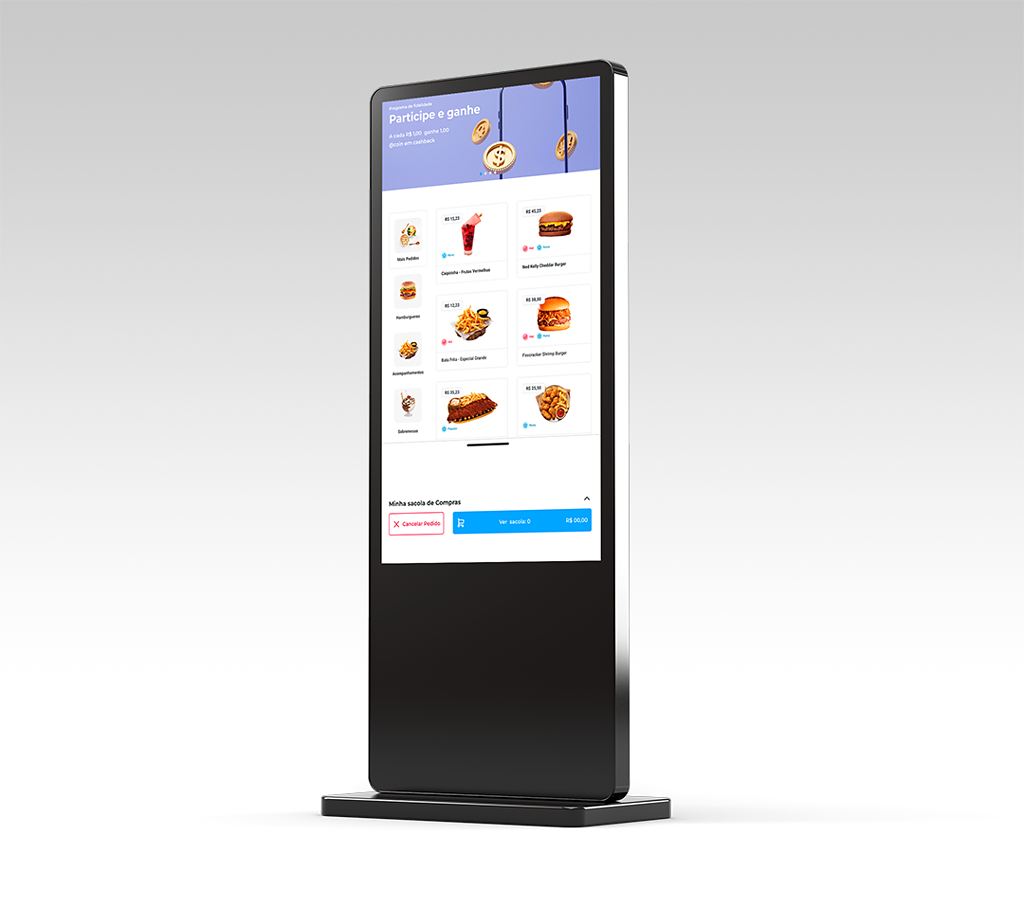
As for KIOSK , it's a full-service self-service kiosk with a customizable menu and configuration options that adapt to your operation — whether that's direct sale, pickup by number, or prepaid or postpaid tabs.
Restaurants that use the self-service kiosk cut down on lines and see revenue increase by up to 10%, while also reducing operating costs by up to 31%.
If you want to know how these solutions can help your restaurant grow, request a free demo right now and talk to our consultants!